Where Legacy Research Breaks (and What Modern Teams Do Instead)

Traditional research models were built for a different era. An era when decisions moved slowly. When research was centralized. When studies were planned months in advance and delivered as static reports.

That model no longer fits today’s reality.

Here’s where legacy approaches consistently fall short.

Linear workflows don't match modern decision-making

Legacy research follows a familiar pattern: Brief → field → analyze → present → archive.

Once the project ends, the insight often does, too.

Modern teams don’t operate this way. Decisions happen continuously. Feedback loops are tight. Learnings need to compound over time.

Instead of linear projects, leading organizations build iterative workflows that allow them to:

  • Learn
  • Adjust
  • Re-test

Research becomes an ongoing process, not a single deliverable.

Siloed insights limit impact

In many organizations, insights live in decks, shared drives, or disconnected tools.

This creates duplication, misalignment, and lost institutional knowledge.

Modern research platforms centralize data and insights so teams can collaborate, build on prior work, and maintain consistency across studies.

The goal isn’t just access, but continuity.

Slow timelines undermine relevance

When insights arrive weeks after a decision is made, their value diminishes.

Legacy approaches struggle to deliver at the speed modern businesses require.

Modern teams prioritize rapid setup, fast fielding, and automated analysis so insights arrive when they’re still actionable.

Manual processes don't scale

From survey design to analysis, traditional workflows rely heavily on manual effort. As demand grows, teams hit capacity limits.

AI-enabled platforms help automate repetitive tasks, freeing researchers to focus on strategy, interpretation, and impact.

What modern teams do differently

Instead of retrofitting old models, modern organizations rethink research from the ground up.

They focus on:

  • Designing workflows, not just studies
  • Building shared systems, not isolated projects
  • Prioritizing speed without sacrificing rigor
  • Embedding insights into everyday decision-making

This shift enables teams to move through the full research lifecycle —from evaluation to adaptation— continuously.

Explore how modern teams structure their workflows in the Modern Consumer Research Playbook.

Estimated Read Time
1 min read

From “Ick” to “Wow” to “Meh”: What Makes or Breaks Brand Love in 2025

We asked a representative sample  across generations —Gen Z, Millennials, Gen X, and Boomer— to tell us what gives them the “ick”, what makes them say “wow!”, and what leaves them feeling “meh.” The results reveal a striking mix of shared expectations and generational divides that define how people judge brands in 2025.

1. Everyone Still Buys on the Basics

Across every generation, price and quality were the top two drivers of brand choice, outranking trendiness, social impact, or even customer experience by wide margins.

  • 72% said price influences their brand choices most.
  • 68% said product quality is the deciding factor.

Even in an era of personalization and purpose-driven messaging, value still rules the day.

Translation: Fancy storytelling won’t save you if your price or product feels off.

2. The "Ick" Factor: Bad Service Tops the List

Bad service was the #1 reason people get turned off by a brand — cited by over two-thirds (67%) of respondents. After that, generational “ick” triggers diverged:

  • Gen Z: Cheap packaging (54%) and copycat branding (48%)
  • Millennials: Greenwashing (57%), cheap packaging (49%), slow service (45%)
  • Gen X: Bad ethics (59%) and slow service (42%)
  • Boomers: Political statements (61%) and slow service (47%)

Each group’s “ick” reflects what they value most: originality for Gen Z, authenticity for Millennials, ethics for Gen X, and neutrality for Boomers.

Translation: “Ick” moments happen when brands violate a generation’s core value.

3. Why People Walk Away

When asked why they stopped buying from a brand, price and quality were the clear dealbreakers:

  • Rising prices: the top reason for Gen Z (44%), Gen X (47%), and Boomers (52%)
  • Declining quality: the leading reason for Millennials (49%)

That tension reveals a split: younger and older consumers are cost-conscious, while Millennials,  a generation defined by brand loyalty, are most likely to walk when quality slips.

4. Recovery Looks Different by Generation

When brands make mistakes, everyone wants accountability. But how they want it differs:

  • Gen Z (39%) want brands to partner with credible third parties to show change.
  • Millennials (42%) want to see brands listen and incorporate feedback.
  • Gen X (48%) want brands to correct mistakes quickly and transparently.
  • Boomers (51%) want brands to take clear accountability without excuses.

It’s a masterclass in generational communication styles: Gen Z looks for credibility, Millennials for dialogue, Gen X for speed, and Boomers for ownership.

5. The "Wow" Factor: Simple, Human, Honest

When it comes to delight, human moments still win. While value remains the baseline expectation for most consumers (61% cited great value for the price), the true “wow” triggers were far more human:

  • Friendly, helpful service (57%)
  • Brands that go above and beyond (44%)

Generationally, the “wow” factor looks like this:

  • Gen Z: Great value for the price (63%)
  • Millennials: Going above and beyond to help a customer (49%)
  • Gen X and Boomers: Fast, friendly, human service (58% and 61%, respectively)

The biggest “wow” driver across all groups? A genuinely great customer experience;  one that is authentic, efficient, and emotionally resonant.

Translation: Consumers don’t want perfection; they want clarity, care, and responsiveness.

6. The "Meh" Zone: When Brands Feel Forgettable

If “ick” repels and “wow” inspires, “meh” simply numbs. Across generations, mediocrity was the main culprit:

  • 52% said “the quality is just okay.”
  • 41% said “the brand just isn’t for me.”
  • 38% said “it overpromises and underdelivers.”

“Meh” isn’t about dislike, but about disconnection. It’s what happens when brands do everything “fine” but nothing memorable.

7. The Generational Pulse

A few final tensions round out the picture:

  • Gen Z and Gen X are largely indifferent when brands take political or social stances (43% and 47% say “I don’t care either way”).
  • Millennials (54%) are more supportive of brand activism.
  • Boomers (62%) prefer brands to stay out of politics entirely.

As for personalization, nearly half of Boomers (49%) and 42% of Millennials said it crosses the line from helpful to “creepy” when it feels like surveillance, or when ads seem to “listen” or data feels harvested without consent.

Gen Z and Gen X, by comparison, were more evenly split: about a quarter of each group cited creepiness when personalization uses information they didn’t knowingly provide or when ads follow them across devices.

In short, personalization delights when it feels intuitive, but repels when it feels intrusive, especially for older generations who expect clearer boundaries.

8. From Indifference to Impact

Across all the data, one truth stands out: Consumers reward clarity, humanity, and consistency, and they punish tone-deafness, manipulation, or mediocrity.

If bad service gives the “ick” and honest communication earns the “wow,” then the “meh” middle is where brands quietly lose the battle for attention.

Estimated Read Time
3 min read

What Sexy Data Scientists Are Doing These Days

A Conversation Between Dr. Naira Musallam and Priscilla McKinney on AI, Design, and Defying the Odds

In a recent episode of the podcast Digital Transformation Success, SightX co-founder Dr. Naira Musallam sat down with Little Bird Marketing’s Priscilla McKinney for an inspiring conversation about the evolution of data science, building inclusive technology, and the very human side of innovation.

Below are some of the most insightful moments from their conversation.

Q: What led you to start SightX?

“In 2012, there was an HBR article that referred to data scientists as having ‘the sexiest job of the 21st century’, but 70% of their time was spent on prep work. What a waste of human potential. After all, the only commodity you can't get back is time."

Naira shared that SightX was born from a personal frustration: watching highly skilled data scientists and researchers waste time cleaning and formatting fragmented data. That realization led to a mission to eliminate the fragmentation in research workflows and give people back their time to focus on meaningful work. The vision was to create an all-in-one streamlined consumer insight platform, with research methodologies that are easy to set up, with automated yet flexible analytics.

Q: What's keeping your customers up at night?

"They’re expected to do more with less."

Whether in insights, strategy, or product roles, SightX customers are under pressure to produce smarter, faster research, on tighter timelines and with fewer resources. That’s why automation and streamlined workflows have become core to the platform’s value.

Q: Let's talk about AI. How do you separate the hype from the real opportunity?

AI isn’t just a buzzword for Naira, it’s a toolset that’s evolving rapidly. But she’s candid about where it excels and where it falls short.

“What you’re trying to do is enable a machine to do what a human once did. But can it now generate something I couldn’t predict myself?”

At SightX, that meant embracing both automation and AI, but doing so with intention.

While AI may hallucinate or feel like a black box, it’s transformative for qualitative inputs like text, transcripts, and images; areas where NLP and generative tools thrive. For quant, however, SightX continues to rely on its own automated library of validated formulas. Accuracy still matters, and no one can afford blackboxes in quantitative analytics.

“We decided to disrupt our own code and build on what we’ve mastered.”

Q: Why build your own code from scratch?

It all comes back to scaling expertise and making what is complex, simple. That’s why design is central to the SightX experience.

“We wanted methodologies that were smart and sophisticated… and easy to use. If people feel uncomfortable using the platform, it doesn’t scale anything.”

Inclusivity means anyone, from a statistician to a brand marketer, should be able to extract meaningful insights with confidence.

Priscilla reflected: 

“We like to interact with beautiful things, and your platform is a beautiful thing. The simplicity and user experience really matter.”

Q: What advice would you give to up-and-coming data scientists?

Naira reflected on how quickly the field has evolved:

“Ten years ago, it was ‘you need to code.’ Now it’s about writing prompts.”

But the most important skill?

“Curiosity. Flexibility. A hunger to learn. That mindset matters more than any hard skill. We’re looking at the future through the limits of our imagination. Things will change in ways we can’t even anticipate. Being open to change is essential."

Q: What about advice for women in tech?

“Don’t get disheartened. There are challenges, yes, but also incredible stories of people defying odds and forging new futures. Focus on that. Let it energize you. Nothing great comes from focusing on the negative.”

And above all, she emphasized the power of connection:

“Human relationships, genuine ones, go a long way, especially when you least expect them to.”

Listen to the full episode: “What Sexy Data Scientists Are Doing These Days” with Naira Musallam and Priscilla McKinney


Estimated Read Time
3 min read

Rethinking Research: Why the Future of Insights Is Human + Automation

Tags

Let’s be honest, legacy research models aren’t cutting it anymore. Quarterly trackers, siloed systems, and endless decks were built for a slower, more predictable world. But today’s consumers change faster than your product roadmap, and insight teams need to keep up. That doesn’t mean replacing humans with AI. It means rethinking how they work together.

The rise of automation and generative AI hasn’t made researchers obsolete. In fact, it’s made them more essential than ever. But only for the teams willing to adapt. The most forward-thinking organizations are ditching disconnected tools, realigning their workflows, and building integrated, always-on research systems. They’re pairing human judgment with machine speed to ask better questions, move faster, and scale smarter without sacrificing rigor.

We dive deeper into this transformation in our latest thought leadership piece: "The Insight Loop: Humans + Automation". In it, explore how leading teams are future-proofing their research operations, and why the next generation of insights will be powered by both people and machines.

Estimated Read Time
1 min read

Customer vs. Consumer Segmentation: What’s the Difference?

In today’s data-rich world, segmentation is the foundation of personalized marketing, product development, and strategic decision-making. But not all segmentation is created equal.

One of the most common points of confusion? The difference between customer segmentation and consumer segmentation.

Let’s break it down.

What is Customer Segmentation?

Customer segmentation is the process of dividing your existing customers into distinct groups based on shared characteristics—like purchase history, product usage, demographics, or loyalty behaviors.

Most commonly used for:

  • CRM personalization
  • Retargeting campaigns
  • Loyalty program optimization
  • Reducing churn

Common data sources:

  • Transactional data
  • CRM profiles
  • Support interactions
  • NPS or CSAT surveys

In short: Customer segmentation is about understanding people who’ve already bought from you.

What is Consumer Segmentation?

Consumer segmentation refers to the process of dividing a broader population—not just current customers—into groups based on behaviors, needs, preferences, or attitudes.

This type of segmentation happens before someone becomes a customer. It’s typically used in market research, product development, and brand strategy.

Most commonly used for:

  • Product and concept testing
  • Go-to-market strategy
  • Message testing and creative development
  • Identifying whitespace opportunities

Common data sources:

  • Survey research
  • Behavioral studies
  • Panel responses
  • Psychographic profiling

In short: Consumer segmentation helps you understand potential buyers—before they convert.

Why the Distinction Matters

  Customer Segmentation Consumer Segmentation
Stage Post-purchase Pre-purchase
Focus Retention & personalization Market discovery & innovation
Data Sources CRM, usage data Surveys, panels, psychographics
Primary Use Cases Loyalty, upsell, churn reduction Product development, brand positioning
Teams Involved CRM, CS, Growth Insights, Brand, Strategy, Innovation

When to Use Each (Or Both)

If you're launching a new product or repositioning a brand, consumer segmentation gives you a lay of the land—who exists in your potential market and what they want.

Once you have customers, customer segmentation helps you retain and grow those relationships.

In an ideal world, organizations use both—starting with consumer segmentation to identify who to go after, then customer segmentation to serve them better once they’re onboard.

The SightX Advantage

SightX allows you to run both types of segmentation studies—quickly and cost-effectively.

With our AI-powered consumer research platform, you can:

  • Launch survey-based consumer segmentation studies in hours (not weeks)
  • Visualize psychographic and behavioral clusters in real-time
  • Bridge the gap between potential and current audience insights

Whether you're validating an idea, refreshing a brand, or optimizing post-sale engagement—SightX gives you the tools to make data-driven decisions at every stage of the customer lifecycle.

Final Thought

If you're only segmenting current customers, you're only seeing part of the picture.

True growth starts by understanding the people who haven't bought yet.

Estimated Read Time
2 min read

How Pabst Brewing Combines Heritage and Innovation to Drive Growth

At SightX, we are privileged to partner with some of the most iconic and innovative brands in the world, and Pabst Brewing Company is no exception. As one of America’s oldest breweries, Pabst has masterfully blended heritage with innovation to meet evolving consumer preferences and drive sustained growth. Their Consumer Insights team, tasked with unlocking deeper consumer understanding to fuel product innovation and marketing, epitomizes this forward-thinking approach.

When Pabst came to us seeking a solution for their research hurdles, we saw a natural alignment between their ambitions and our platform’s capabilities. Together, we’ve built a partnership that’s transforming how they gather insights, make decisions, and innovate for the future.

A Solution for Modern Challenges

Before adopting SightX, Pabst faced several challenges that hindered their ability to make truly data-driven decisions. Traditional research tools fell short in key areas:

  • Flexibility: Their previous platforms lacked advanced survey methodologies like conjoint, robust concept testing, and TURF analysis, critical for understanding consumer preferences and testing new concepts comprehensively.
  • Affordability: High costs made scaling their research efforts difficult, limiting their ability to run multiple projects or explore new ideas.
  • Data Quality: Overinflated purchase intent and likability scores left Pabst unsure of which concepts would resonate most effectively with their audience, creating inefficiencies in their decision-making process.

Pabst needed a platform that could deliver reliable insights, advanced capabilities, and cost-effectiveness. That’s where SightX came in.

Why SightX?

Our platform offered Pabst the flexibility, reliability, and affordability they were looking for. With advanced tools like TURF analysis and conjoint in addition to robust survey capabilities —provided at no additional cost—we equipped them with the methodologies needed to tackle their most pressing research challenges. SightX’s modular components and seamless integration of sub-samples and cross-tabs allowed Pabst to dive deeper into consumer preferences, uncovering granular insights to guide their strategies.

Equally important, we addressed their data quality concerns. SightX delivered accurate and actionable insights, enabling Pabst to confidently prioritize winning concepts. The exceptional support from our team during the trial period earned the trust of Pabst’s leadership, cementing SightX as a long-term partner in their growth journey.

A New Era of Research at Pabst

With SightX, Pabst has redefined its approach to research. Our platform has been instrumental in helping them:

  • Evaluate Concepts with Confidence: Pabst tested over 40 concepts using SightX, with Top 2 Box purchase intent scores (probably or definitely will buy) ranging from 53% to 86%. These reliable metrics allowed them to identify the ideas that truly resonated with their audience.
  • Optimize Product Innovation: By leveraging tools like TURF analysis and conjoint, Pabst aligned new product offerings with consumer preferences, ensuring market readiness and competitive advantage.
  • Test Pricing Strategies: For new ventures like ready-to-drink (RTD) cocktails, SightX enabled Gabor-Granger pricing studies to identify optimal price points.
  • Track Brand Health Affordably: In 2025, Pabst will transition its brand health tracking to SightX, reducing costs to less than 20% of what they would have spent with traditional vendors. These savings are reinvested into additional research efforts, allowing the team to run more projects and gather deeper insights than ever before.

Driving Impact and Growth

The impact of SightX on Pabst’s business strategy has been profound. By integrating our platform into their research process, they’ve:

  • Enhanced Decision-Making: Reliable, actionable data has empowered Pabst to prioritize winning concepts with greater confidence, improving the success rate of product launches and marketing campaigns.
  • Increased Agility: Rapid, iterative testing capabilities allow Pabst to stay ahead of market trends and respond quickly to shifting consumer demands.
  • Maximized Resources: Significant cost savings have enabled Pabst to expand their research efforts, running more projects than they previously could while maintaining high-quality insights.

As Bill Duncan, a key member of Pabst’s Consumer Insights team, noted: “SightX is truly a researcher’s platform. If you know how to design surveys and apply best practices in research, this tool allows you to do everything you need to do. There's no survey I couldn’t craft with SightX—its flexibility is virtually limitless, from piping and routing to conditional logic. It’s intuitive and has it all.”

Looking Ahead: A Partnership for Growth

At SightX, we are thrilled to celebrate the success Pabst has achieved through our partnership. Their ability to combine the legacy of their heritage brands with cutting-edge innovation is nothing short of inspiring. Together, we’re pushing the boundaries of what’s possible in consumer insights, ensuring that Pabst remains a leader in a competitive and ever-changing market.

Read the full case study on how Pabst is using SightX to drive innovation and growth here.

Estimated Read Time
3 min read

Create Your Own Luck: How Consumer Research Turns Uncertainty Into Opportunity

Tags

Every year on Saint Patrick’s Day, people celebrate luck—whether it’s finding a four-leaf clover, wearing green, or hoping for good fortune. But in business, luck isn’t something to wish for—it’s something you create. As the saying goes, "luck is what happens when preparation meets opportunity." At SightX, we believe that luck in business isn’t random; it’s the byproduct of strategy, research, and action. By leveraging data and insights, companies can increase their chances of success and turn uncertainty into opportunity. Let’s explore how creating your own luck parallels the value of consumer research.

Luck as a Byproduct of Preparation and Action

Many of the world’s most successful companies didn’t stumble upon their success by chance—they created it through preparation and action. Businesses that consistently invest in consumer research, analyze trends, and adapt to market shifts set themselves up for what appears to be "lucky" breaks. When a company continuously gathers insights, it’s not reacting to change—it’s anticipating it. With the right data at hand, brands can confidently make decisions that maximize their chances of success.

Insights Turn Chance Into Opportunity

Tim Denning, a prominent thought leader, argues that luck isn’t something that happens randomly—it’s something we generate through our actions. The same principle applies to consumer research. Data itself doesn’t create opportunities, but it equips businesses with the knowledge to recognize and seize them. By leveraging consumer insights, companies can identify emerging trends, refine their messaging, and optimize product offerings before competitors catch on. In other words, data doesn’t guarantee success, but it ensures businesses are ready when opportunities arise.

Building Luck Through Consumer Understanding

Some companies seem to have an uncanny ability to always be in sync with consumer desires. The reality? They aren’t lucky—they’re informed. A deep understanding of consumer behavior allows businesses to make calculated decisions that feel almost intuitive. With the SightX platform, brands can uncover valuable insights into what their customers truly want, ensuring their offerings align with market demand. Businesses that prioritize research consistently make smarter, more strategic choices, giving them a competitive edge that others might attribute to luck.

The Role of Curiosity and Consistency in Business Success

Denning highlights curiosity and consistent effort as key elements in generating luck. The same applies to business. Companies that continuously ask questions, challenge assumptions, and seek to understand their customers are the ones that stay ahead. Market dynamics shift constantly, and those who remain curious—by running regular research studies, gathering feedback, and iterating on their strategies—are the ones best positioned for long-term success. Luck favors the informed and the proactive.

Luck is Predictable in Business

At the end of the day, luck in business isn’t about chance—it’s about preparation, insight, and execution. When companies leverage the right data and insights, they can align their strategies with consumer expectations and reduce uncertainty. SightX empowers businesses to make data-driven decisions, helping them turn unpredictability into a strategic advantage.

By investing in consumer research, brands don’t just wait for luck to strike—they create it.

Estimated Read Time
2 min read

Do You Get Agitated by Performative International Women’s Day Hashtags? Join the Club.

Tags

For many females, me included, International Women’s Day is a glaring reminder of how much work still needs to be done to achieve equity in the work place.  Every March, so many well intentioned people flood our feeds with pink logos, inspirational quotes, and gestures. But here’s the truth: Women don’t need hashtags. They need action.

The Hard Truth About Women in Business and Leadership

If we all really want to honor International Women’s Day, we need to confront the uncomfortable realities:

  • Only 10% of Fortune 500 CEOs are women.
  • Women founders receive less than 2% of venture capital funding.
  • Women still earn 84 cents for every dollar a man makes—and for women of color, the gap is even wider.
  • Nearly 50% of women report experiencing workplace discrimination.

And yet, every year, companies roll out social media campaigns with feel-good messaging while continuing to ignore the systemic inequalities baked into their own organizations.

Consumers are Watching - And They Expect More

Women are tired of performative activism. In a YouGov study, 73% of women said they want to see real support for women-owned businesses, not just lip service. Gen Z and Millennial consumers, in particular, want to hold companies accountable. If your company is still running a workplace where women are underpaid, underrepresented, or overlooked, no amount of pink merchandise will save you.

What Real Commitment Looks Like

For those to do more than just posture on March 8th, start here:

  • Close the pay gap. Conduct an internal pay audit and take corrective action — transparently.
  • Fund women entrepreneurs. Women-led startups drive innovation and economic growth, yet they receive a fraction of investment dollars.
  • Break the glass ceiling. Ensure women have real pathways to leadership and decision-making power.
  • Make policies that work for women. Paid parental leave, flexible work arrangements, and zero-tolerance harassment policies shouldn’t be radical ideas.
  • Put your money where your marketing is. If you’re posting about women’s empowerment, back it up with partnerships, sponsorships, and long-term investments in gender equity.

Data-Driven Action Emerging from Empathy

On a more personal note, as a female co-founder of a consumer research platform, I’ve seen firsthand how businesses can leverage insights to better serve women, by focusing on understanding their needs, specific painpoints, challenges, and conducting pricing studies to avoid the “ Pink Tax”- the unfortunate phenomenon of charging females more for products that are sold for less to their male counterparts.  

At SightX, we believe data should drive action, not just conversation. That’s why we continue to be  committed to helping businesses move beyond assumptions and truly understand the diverse needs, experiences, and challenges of women—both as consumers and professionals. Internally, we continue to make sure that females are holding key roles across our various departments. 

Let’s make International Women’s Day more than a moment—let’s make it momentum.

Estimated Read Time
2 min read

Lab-Grown Diamonds and the Future of Consumer Behavior: A Love for Sustainability and Transparency

Tags

This Valentine’s Day, love isn’t just in the air—it’s in the choices consumers make. As shoppers look for meaningful ways to express their affection, many are turning to lab-grown diamonds, a reflection of the broader shift toward sustainability, transparency, and value-driven purchasing. More than ever, consumers want their gifts to align with their personal values, making lab-grown diamonds a symbol of both love and responsibility.

Evolving Consumer Preferences and Values

The growing acceptance of lab-grown diamonds signifies a fundamental shift in consumer priorities. Younger generations, particularly Millennials and Gen Z, are leading this change. According to a 2023 report by The Knot, nearly 36% of engagement rings now feature a lab-grown diamond, up from just 16% in 2020. Additionally, a study by MVI Marketing found that 70% of Millennials would consider a lab-grown diamond for an engagement ring, citing sustainability and affordability as key factors.

This demand for ethically sourced products is driving brands to rethink their offerings and marketing strategies. Companies like Brilliant Earth, VRAI, Lightbox Jewelry (De Beers' lab-grown diamond brand), Diamond Foundry, and Karia Diamonds are at the forefront, positioning themselves as leaders in the space. Understanding these shifting values is crucial for businesses that want to stay relevant and foster deeper consumer connections—especially during occasions like Valentine’s Day, when sentimentality and meaning are paramount.

Bridging Perception Gaps with Research

Despite the increasing popularity of lab-grown diamonds, perception gaps persist. Some consumers still question their authenticity and long-term value. While a 2024 Statista report found that lab-grown diamonds account for 10% of the total diamond market, the resale market remains a concern for some buyers. Addressing these concerns requires data-driven insights into consumer sentiment.

By leveraging consumer research, brands can uncover nuanced opinions and tailor their education and marketing strategies to bridge these gaps. Companies like VRAI and Diamond Foundry emphasize their zero-carbon footprint, while Lightbox Jewelry focuses on affordability and transparency in pricing. These approaches help foster greater acceptance and trust—ensuring that a Valentine’s Day gift shines as brightly in the mind as it does in reality.

Customization of Messaging Through Data

Not all consumers are drawn to lab-grown diamonds for the same reasons. Some prioritize environmental impact, others focus on affordability, and some are simply looking for high-quality alternatives to mined diamonds. Research by Tenoris found that 60% of Gen Z consumers say sustainability influences their purchasing decisions, making this an especially relevant selling point for lab-grown diamonds.

During a season centered around personal connection, businesses that can segment their audiences effectively and deliver personalized messaging will have the greatest success in engaging consumers. Brilliant Earth, for example, highlights its commitment to ethically sourced diamonds, while Pandora recently shifted its entire diamond collection to lab-grown stones, responding to growing consumer demand for sustainable luxury. By leveraging data-driven insights, brands can craft compelling narratives that resonate with specific consumer groups, ensuring every Valentine’s Day gift feels as special as the love it represents.

Future of Ethical Consumerism

Lab-grown diamonds are just one example of the larger trend toward ethical consumerism. Consumers are increasingly seeking brands that demonstrate a commitment to sustainability, transparency, and ethical practices. According to a McKinsey report on the future of luxury, two-thirds of consumers now consider sustainability when making a purchase, and this trend is expected to grow across all luxury categories.

Companies that proactively monitor consumer sentiment and anticipate these evolving values will be better positioned to lead the market. As this trend continues, businesses that invest in ongoing research and adaptive strategies will build stronger customer relationships and long-term brand loyalty—helping consumers feel good about the gifts they give and receive on Valentine’s Day and beyond.

Trust and Transparency in Consumer Research

Trust is the foundation of consumer adoption. Transparency in sourcing, production, and marketing is critical in addressing skepticism and fostering confidence in lab-grown diamonds. Brands that actively listen to consumer concerns and address them with clear, data-backed messaging will set themselves apart in an increasingly competitive market.

Companies like Diamond Foundry and VRAI are leading the charge in transparency by offering carbon-neutral diamonds with verifiable origins. Meanwhile, Lightbox Jewelry provides straightforward pricing, helping to eliminate confusion in the market. By leveraging authentic consumer insights, brands can make informed decisions that align with consumer expectations—making sure that every diamond, lab-grown or not, becomes a meaningful token of love.

Conclusion

This Valentine’s Day, as people search for gifts that reflect their deepest emotions, lab-grown diamonds present an opportunity to celebrate love in a way that’s as responsible as it is beautiful. With the backing of sustainability-conscious brands, growing consumer acceptance, and data-driven insights, the industry is poised for continued growth. By embracing transparency, personalization, and ethical consumerism, brands can help ensure that love, in all its forms, truly lasts forever.


Estimated Read Time
3 min read

The Power of Connection: How Technology Transforms Consumer Insights into Action

Tags

The ability to understand and act on consumer insights is critical to the success of any business. Companies that leverage advanced consumer research tools are not only able to capture data but also translate it into actionable strategies that drive business growth. Technology serves as the essential bridge between businesses and consumers, enabling companies to make data-driven decisions with confidence.

This blog explores the transformative role of technology in consumer research, how it bridges the gap between businesses and their target audiences, and why innovation through insights is the key to staying competitive. We will also highlight the importance of transparency, trust, and human-centered technology in fostering deeper connections between brands and consumers.

Technology as the Bridge Between Data and Action

Consumer research platforms have evolved from static data collection tools to dynamic engines of insight and innovation. Businesses today generate an overwhelming amount of consumer data, but without the right tools, that data remains just noise. The true power of technology in consumer research lies in its ability to process, analyze, and translate raw data into actionable insights that inform business decisions.

Key Technologies in Consumer Research

Savvy marketers don’t leave success to chance. Using online surveys and AI-powered research platforms like SightX, brands can test multiple ad concepts weeks or months before the Super Bowl to identify which messaging, visuals, and emotional triggers resonate best with target audiences.

  • AI and Machine Learning: These technologies help identify patterns in consumer behavior and predict future trends with remarkable accuracy.
  • Real-Time Analytics: Businesses no longer have to rely on outdated reports; real-time dashboards offer instant visibility into customer sentiments and preferences.
  • Automated Survey Platforms: Tools that enable quick, agile consumer research, allowing brands to gather insights efficiently.
  • Big Data Integration: Combining different data sources (social media, purchase data, web interactions) for a comprehensive view of the customer journey.

With these technologies, companies can bridge the gap between numbers and narratives, ensuring that insights lead directly to meaningful action.

The Role of Human-Centered Technology in Business Success

While technology powers modern consumer research, the most effective solutions keep human needs at the core. Human-centered technology is designed to understand not just what consumers do, but why they do it. Businesses that listen to their customers and respond to their pain points create stronger relationships and more resonant products.

How Human-Centered Technology Enhances Consumer Research 

The most impactful consumer research platforms integrate human-centered technology, ensuring that data collection and analysis prioritize real consumer experiences, needs, and emotions. Traditional consumer research methods often rely on rigid, predefined frameworks that may not fully capture the nuances of human behavior. However, human-centered technology brings a more adaptive and empathetic approach to understanding consumers.

1. Empathy-Driven Data Collection

Unlike traditional long surveys that focus solely on numbers, human-centered research tools aim to understand the "why" behind consumer behaviors. By incorporating more experiments that are somewhat gamified -such as MaxDiff or open-ended responses, facial recognition, and sentiment analysis- these tools aim to understand deep-rooted motivations and emotional drivers.

For example, AI-powered sentiment analysis can detect whether a consumer's response carries positive, negative, or neutral emotions, helping brands identify not just preferences, but the emotional connections consumers have with products.

2. Customizable and Adaptive Research Experiences

Human-centered technology enables businesses to create flexible and personalized research experiences. Instead of static surveys, platforms now offer dynamic questioning, where follow-up queries adjust based on a respondent's previous answers.  This creates a more interactive and engaging research experience while providing richer insights.

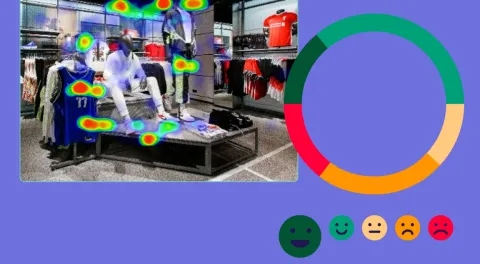
For instance, in a heat map exercise in concept testing, respondents are presented with images that typically reflect a package or a mockup for a website, and are asked to highlight on the heatmap those parts that they like and dislike, leading to more engaging experiences.

3. Conversational AI and Chatbots for Real-Time Feedback

With the rise of AI-driven chatbots, brands can engage consumers in real-time conversations, gathering instant feedback without the friction of formal surveys. These chatbots can probe deeper based on responses, ask clarifying questions, and even mirror a natural human conversation, leading to richer qualitative insights.

Additionally, AI chatbots can function across multiple touchpoints—from social media to customer support interactions—capturing spontaneous consumer reactions and preferences without disrupting the user experience.

4. Behavioral Tracking for Enhanced Accuracy

Self-reported data is valuable but can sometimes be biased or incomplete. Human-centered technology incorporates behavioral tracking tools that analyze actual consumer actions rather than just stated preferences. This includes:

  • Eye-tracking technology to understand how consumers visually engage with products or advertisements.
  • Clickstream analysis to map how users navigate a website and what holds their attention the longest.
  • Biometric feedback to measure emotional responses, such as heart rate or skin conductivity, while interacting with marketing content.

These advanced methodologies ensure that consumer insights are not only based on what people say but also on how they behave in real-world scenarios.

5. Augmenting Human Intelligence with AI

Human-centered research doesn’t mean replacing human insight with AI but rather augmenting human capabilities. AI-powered analytics can process vast amounts of data at speeds impossible for human researchers, but human expertise is needed to interpret and apply these insights meaningfully.

For instance, AI can quickly identify consumer sentiment trends across social media platforms, but a human analyst provides context, nuance, and strategic recommendations that align with brand objectives.

6. Multi-Channel Engagement for Holistic Consumer Understanding

To truly understand modern consumers, brands must engage with them across multiple touchpoints. Human-centered technology allows businesses to collect insights from:

  • Social media interactions
  • Customer support chats
  • Online reviews and forums
  • Wearable devices and IoT data

By aggregating insights from various channels, businesses get a 360-degree view of consumer behavior, ensuring research reflects real-world experiences and preferences.

The Impact of Human-Centered Consumer Research 

By integrating human-centered technology, businesses can:

  • Develop deeper consumer relationships through personalized engagement.
  • Improve product and service design by prioritizing real consumer needs.
  • Enhance marketing strategies by aligning campaigns with authentic customer motivations.
  • Increase participation rates in research efforts by making the process engaging and seamless.

Ultimately, human-centered technology transforms consumer research from a data collection exercise into a strategic tool for creating meaningful customer connections and driving business success.

Bridging the Gap Between Businesses and Their Customers 

One of the most significant challenges businesses face today is truly understanding their customers. Consumer expectations evolve rapidly, and companies that fail to keep up risk losing market relevance. Technology in consumer research acts as a bridge between businesses and the voice of the customer, providing a continuous feedback loop that helps brands stay connected to shifting preferences.

Ways Technology Enhances Business-Consumer Relationships: 

  • Sentiment Analysis: AI-powered tools scan online conversations to gauge public opinion about a brand or product.
  • Segmentation and Personalization: Using data to create highly targeted marketing and product development strategies.
  • Agile Consumer Research: Conducting quick-turn research to adapt to emerging trends.
  • Two-Way Communication Platforms: Encouraging consumer participation through feedback communities and interactive platforms.

By leveraging these tools, businesses foster stronger, more authentic connections with their audience, leading to greater brand loyalty and customer satisfaction.

Estimated Read Time
5 min read