Where Legacy Research Breaks (and What Modern Teams Do Instead)

Traditional research models were built for a different era. An era when decisions moved slowly. When research was centralized. When studies were planned months in advance and delivered as static reports.

That model no longer fits today’s reality.

Here’s where legacy approaches consistently fall short.

Linear workflows don't match modern decision-making

Legacy research follows a familiar pattern: Brief → field → analyze → present → archive.

Once the project ends, the insight often does, too.

Modern teams don’t operate this way. Decisions happen continuously. Feedback loops are tight. Learnings need to compound over time.

Instead of linear projects, leading organizations build iterative workflows that allow them to:

  • Learn
  • Adjust
  • Re-test

Research becomes an ongoing process, not a single deliverable.

Siloed insights limit impact

In many organizations, insights live in decks, shared drives, or disconnected tools.

This creates duplication, misalignment, and lost institutional knowledge.

Modern research platforms centralize data and insights so teams can collaborate, build on prior work, and maintain consistency across studies.

The goal isn’t just access, but continuity.

Slow timelines undermine relevance

When insights arrive weeks after a decision is made, their value diminishes.

Legacy approaches struggle to deliver at the speed modern businesses require.

Modern teams prioritize rapid setup, fast fielding, and automated analysis so insights arrive when they’re still actionable.

Manual processes don't scale

From survey design to analysis, traditional workflows rely heavily on manual effort. As demand grows, teams hit capacity limits.

AI-enabled platforms help automate repetitive tasks, freeing researchers to focus on strategy, interpretation, and impact.

What modern teams do differently

Instead of retrofitting old models, modern organizations rethink research from the ground up.

They focus on:

  • Designing workflows, not just studies
  • Building shared systems, not isolated projects
  • Prioritizing speed without sacrificing rigor
  • Embedding insights into everyday decision-making

This shift enables teams to move through the full research lifecycle —from evaluation to adaptation— continuously.

Explore how modern teams structure their workflows in the Modern Consumer Research Playbook.

Estimated Read Time
1 min read

Introducing AI-Powered Video Analytics: Qualitative Analysis at Scale

The Next Era of Insights Is Here, and It's Visual.

We’re excited to introduce AI-Powered Video Analytics, the newest addition to the SightX platform and the first feature release in our ongoing AI evolution. This launch brings qualitative analysis into the age of intelligent automation, making it faster and easier than ever to uncover meaning in recorded interviews, open-ended conversations, and video feedback.

Read the official press release →  Here

See What's Being Said, and How It's Being Said

Until now, analyzing qualitative video data has been one of the most time-consuming tasks for researchers. Watching, tagging, and summarizing each response can take hours or even days.

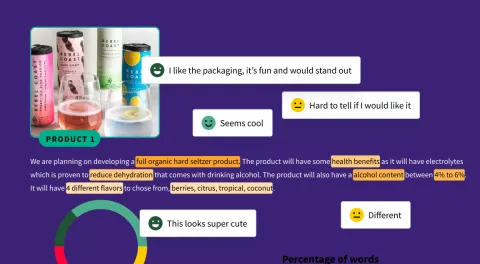
With AI-Powered Video Analytics, that work happens in seconds. The platform automatically identifies recurring themes, common topics, and associated sentiment across every video in your project.

That means you can:

  • Instantly filter videos by topic or tone
  • Surface key insights from hundreds of interviews at once
  • Pinpoint the most compelling clips and quotes to share with stakeholders

It’s qualitative analysis at scale, powered by AI, and guided by you.

A Smarter Way to Understand Human Emotion

While numbers tell you what consumers do, videos reveal why. Now you can quantify the emotional undercurrents of your qualitative research helping your teams make richer, more human-centered decisions.

Whether you’re testing creative, validating concepts, or exploring new market spaces, video analytics helps you connect the dots between language, sentiment, and motivation.

Part of a Larger AI Evolution

This release builds on the vision we introduced in our recent post on the next evolution of AI in SightX.

We’re expanding what’s possible in research by enhancing both our native platform capabilities like this one, and Ada, your built-in AI research consultant.

Together, these advancements will redefine what it means to move from raw data to strategic decision-making, faster, deeper, and smarter than ever before.

Estimated Read Time
1 min read

The Next Evolution of AI in SightX: Where Human Intelligence Meets Automation

Tags

Artificial intelligence is reshaping every corner of the insights industry, but not all AI is created equal. While some tools rely on generic models and surface-level automation, at SightX, our approach has always been different. We believe in building AI that scales human intelligence, not replaces it.

That’s why the next evolution of SightX is focused on advancing AI-driven functionality across two key fronts:

  1. Native AI features built directly into the platform, enhancing how users collect, analyze, and visualize data.
  2. Enhanced capabilities within Ada, our generative AI research consultant, one of the first of its kind, designed to help you ask smarter questions, analyze results faster, and uncover insights in real time.

Together, these advancements mark a new chapter in our mission to make research faster, deeper, and more intuitive, powered by responsible, human-centered AI.

A Smarter, More Seamless Platform 

In the months ahead, we’ll be introducing new functionality that brings AI deeper into the SightX experience. These capabilities will help you analyze complex data faster and visualize insights with unprecedented clarity.

Our first new feature, AI-Powered Video Analytics, will make qualitative analysis at scale possible, giving researchers the power to instantly identify common themes, sentiments, and standout moments across video interviews. It’s the next step toward making all forms of data, whether spoken, written, or numeric, fully actionable.

The Evolution of Ada

Ada has been a trusted partner for researchers since we first introduced her: a generative AI consultant built to guide study design, summarize results, and provide instant feedback. But as the industry evolves, so does she.

This year, Ada will become even more capable, more adaptive, more intuitive, and more deeply connected to your projects and data within SightX. With these enhancements, Ada moves closer to being the always-on collaborator every insights team wishes they had.

Human + AI = Better Decisions

At SightX, we don’t see AI as a replacement for human thinking, but an amplifier. By bringing together human expertise, high-quality data, and intelligent automation, we’re helping teams move from raw information to strategic decision-making faster than ever.

Stay tuned as we continue unveiling new features under this AI innovation umbrella. Each release is part of a larger vision: to create the most powerful, flexible, and intelligent research platform in the world, built to scale with your curiosity.

Estimated Read Time
2 min read

When Research Finally Meets Reality: How AI and Human Expertise Are Redefining the Future of Insights

Tags

In the world of consumer research, insights professionals are trained skeptics, and for good reason. Their work is often dissected by finance, marketing, and product teams alike. But what happens when that healthy skepticism meets technology mature enough to match it?

That’s exactly what SightX Co-CEO Tim Lawton and Russell Evans, Partner at ZS, explored on a recent episode of CustomerLand: When Research Finally Meets Reality. The two discussed how the SightX + ZS partnership is helping organizations bridge the gap between research and real-world decision-making. Where AI and human expertise finally meet in the middle.

The Power of Partnership: Integrating AI with Human Expertise

The partnership between SightX and ZS was born from a shared belief: technology alone can’t transform how organizations learn about their customers. It takes integration, not just innovation.

  • SightX provides an AI-powered consumer research platform that automates workflows—from survey design to analytics to dashboard reporting—so insights can be generated faster and more consistently.
  • ZS brings the strategic and operational muscle: helping organizations translate those insights into real business impact through governance, change management, and adoption.

Together, they’re creating a model that blends automation with context, thus reducing friction between insight generation and decision-making.

From Pilots to Proof

One of the most compelling examples shared during the conversation came from a confectionery company working with SightX and ZS.

Traditionally, concept testing and product development cycles took months, often with limited ability to adjust midstream. By integrating SightX’s automated testing loop with ZS’s structured facilitation, the team cut development time dramatically, accelerating learning without sacrificing quality.

The result?  A 29% lift in purchase intent, proving that faster, AI-enabled iteration can translate directly into commercial outcomes.

AI Adoption: A Leadership Challenge, Not a Technology Problem

As Tim and Russell noted, the technology itself isn’t the hard part, it’s the permission to use it. Adopting AI effectively requires more than just tools; it demands a cultural and structural shift.

Organizations need to create:

  • Incentives that reward experimentation.
  • New roles dedicated to scouting emerging technologies.
  • Air cover from leadership to test, fail, and refine without fear.

Without these ingredients, even the most advanced tools will struggle to make an impact. As Russell put it, “The teams making AI work are the ones who’ve built bridges between experimentation and governance.”

Understanding the AI Maturity Curve

Not every industry is moving at the same pace. Consumer goods and retail brands are leading the charge, pushed by competitive margins and innovation cycles. Finance, healthcare, and B2B sectors are following close behind as privacy-safe AI workflows gain traction.

Across the board, the message is clear: AI is no longer optional, but adoption without structure can create chaos. The goal isn’t to replace human insight, but to augment it, shortening the path from research to decision.

Culture Comes First

As the  discussion evolved, the conversation turned toward culture and readiness,  recognizing that successful AI adoption isn’t just about pilots or proofs of concept, but about leadership buy-in and psychological safety.

As one example, a CMO at a fruit snack brand provided the “air cover” needed for teams to explore AI freely. That single act of leadership unlocked organization-wide curiosity and adoption.

It’s a reminder that innovation thrives where experimentation is encouraged, and where systems evolve quickly enough to support it.

The Real Signal

The SightX and ZS partnership represents more than a collaboration between two companies, it’s a glimpse into the future operating model for insights.

One where:

  • Automation handles the heavy lifting.
  • Humans steer the hypotheses.
  • Governance ensures learning compounds.

As research finally meets reality, the goal isn’t more data, it’s faster, clearer, more actionable insight that drives real business outcomes.

🎧 Listen to the full conversation on CustomerLandWhen Research Finally Meets Reality →

Estimated Read Time
3 min read

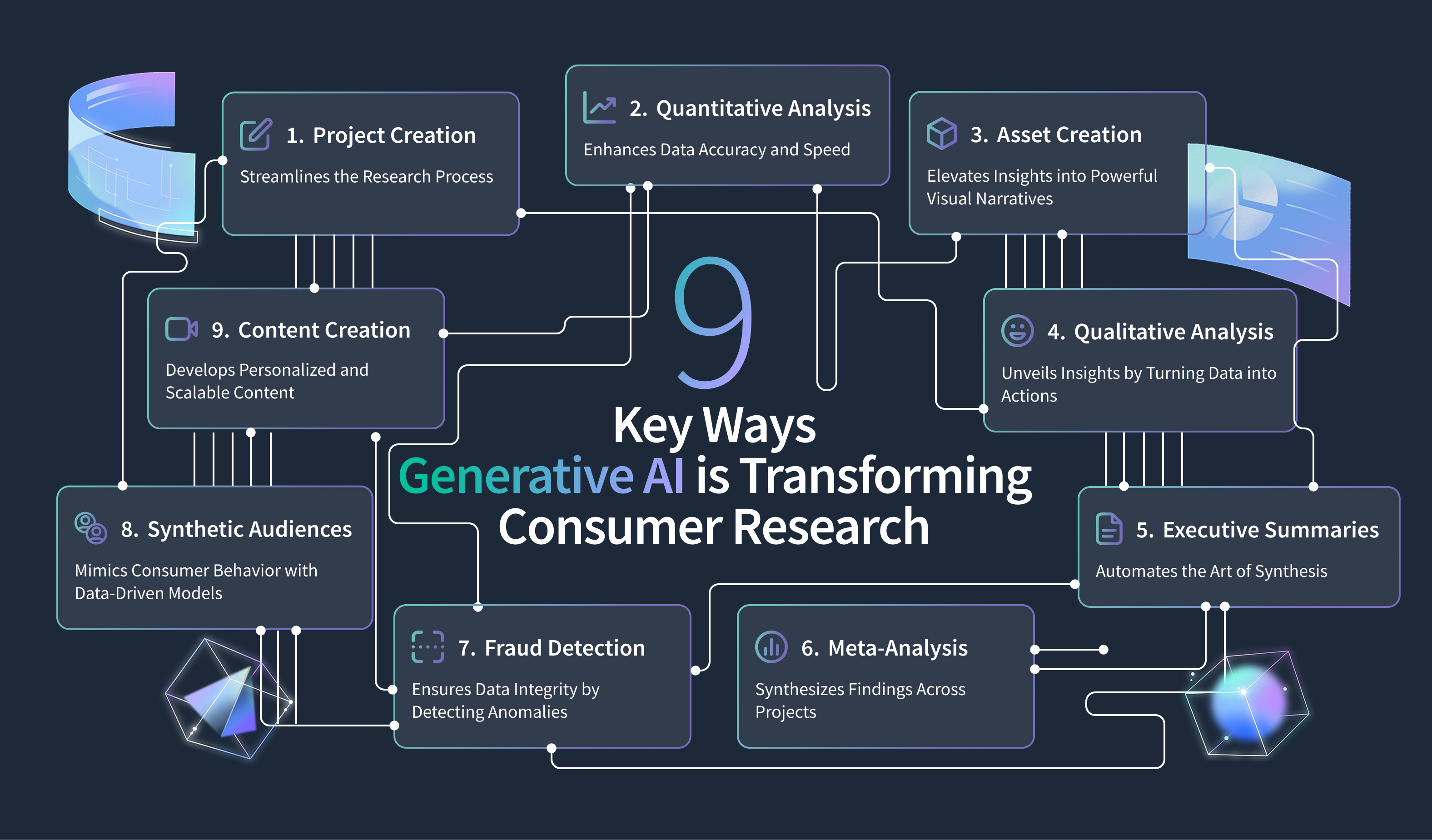
Nine Key Ways Generative AI is Transforming Consumer Research Infographic

Market research is experiencing a significant transformation driven by generative AI. With its capacity to generate content, synthesize insights, and forecast behavior, this technology is redefining how research is performed, analyzed, and utilized. From streamlining repetitive processes to introducing innovative methodologies, generative AI brings unparalleled efficiency, precision, and creativity to the field.

Read this article for a deeper dive into the nine ways generative AI is revolutionizing market research and reshaping how businesses collect and leverage consumer insights.

infographic


Estimated Read Time
1 min read

Nine Key Ways Generative AI is Transforming Market Research

It's commonly understood that market research has been undergoing a major shift thanks to generative AI. This technology, characterized by its ability to create content, synthesize insights, and predict behavior, is reshaping how research is conducted, analyzed, and applied. From automating repetitive tasks to creating entirely new methodologies, generative AI offers unprecedented efficiency, accuracy, and creativity.

Let’s explore nine ways generative AI transforms market research and the way businesses gather and act on consumer insights.

1. Project Creation

Traditional project planning for market research involves extensive time spent defining objectives, conducting literature reviews, designing surveys, and identifying optimal methodologies and sample sizes. Generative AI simplifies this by rapidly generating comprehensive project plans based on minimal input.

For instance, AI can analyze past research briefs and automatically create project outlines tailored to specific business needs, followed by creating detailed survey questionnaires ranging from 10 questions to 100 questions. This accelerates the setup process and ensures a higher degree of customization and relevance.

The Impact: According to McKinsey, AI automation has the potential to reduce the time it takes to gather insights by up to 80%, enabling researchers to focus more on strategy and less on logistics​.

2. Quantitative Analysis: Enhancing Data Accuracy and Speed 

In quantitative research, generative AI excels at processing and analyzing large datasets quickly and precisely. Algorithms can identify trends, correlations, and anomalies that might be overlooked by human analysts.

By leveraging machine learning, generative AI can also build predictive models that help businesses forecast future outcomes. These models offer real-time updates, allowing for more dynamic decision-making.

The Bottom Line: AI-driven analytics make companies 33% more likely to excel in real-time marketing, according to Forrester​

3. Asset Creation: Text-to-Image and Video Transformations

Visual storytelling is a powerful tool in market research. Generative AI enables researchers to convert survey findings and qualitative insights into compelling visuals, such as infographics, videos, and interactive dashboards.

For example, AI can generate visualizations that depict customer segmentation or market trends, making data easier to understand and share with stakeholders.

Use Case: An infographic created by generative AI could summarize complex findings, helping executives grasp critical insights at a glance.

4. Qualitative Analysis: Uncovering Deeper Insights

Qualitative research, such as interviews and focus groups, often involves hours of transcription and manual analysis. Generative AI tools automate these tasks, transforming unstructured data into actionable insights.

Natural Language Processing (NLP) models can identify recurring themes, sentiments, and keywords within transcripts, providing a deeper understanding of consumer behavior.

5. Executive Summaries: Automating the Art of Synthesis

Creating concise, impactful summaries of research findings is a time-consuming task. Generative AI simplifies this process by automatically drafting executive summaries based on analysis results.

With AI, these summaries can be tailored to different audiences—condensed for executives or detailed for data teams—ensuring that everyone gets the information they need.

6. Meta-Analysis: Synthesizing Research Across Projects

Meta-analysis is essential for organizations that conduct multiple studies over time. Generative AI enables researchers to synthesize findings across different projects, identifying overarching trends and patterns.

Why It Matters: This capability not only improves strategic planning but also helps organizations maintain consistency in their research efforts.

7. Fraud Detection: Ensuring Data Integrity

One of the challenges in market research is ensuring the authenticity of data, especially in surveys and online panels. Generative AI can detect fraudulent responses by analyzing patterns, inconsistencies, and data anomalies.

Result: Enhanced data quality leads to more reliable insights, safeguarding the integrity of market research outcomes.

8. Synthetic Audiences: Simulating Consumer Behavior

Generative AI can create synthetic audiences—data-driven models that mimic real consumer behavior. These audiences allow researchers to test campaigns, products, and messaging in a risk-free virtual environment before launching them in the real world.

Example: A retail brand could simulate how different demographic groups respond to a new product, optimizing marketing strategies before a product launch.

9. Content Creation: Personalized and Scalable

Generative AI is transforming how businesses communicate with their audiences. From crafting personalized email campaigns to developing interactive chatbots, AI-generated content enables brands to engage consumers at scale.

Statistical Backing: Adobe reports that companies using AI-driven segmentation see a 233% increase in customer engagement rates.

Generative AI in Action: The Case for Ada

At SightX, our proprietary generative AI assistant, Ada, is revolutionizing the consumer research process. Ada is designed to harness the full potential of generative AI, automating tasks, streamlining workflows, and delivering actionable insights faster than ever before.

Why Ada Stands Out

  • Speed and Efficiency: Reduces research timelines by up to 80%.
  • Cost Savings: Automates labor-intensive processes, saving up to 90% in operational costs​.
  • Enhanced Engagement: AI-driven segmentation improves audience targeting and messaging.

Overcoming Challenges with Generative AI

While generative AI offers transformative benefits, there are challenges to consider, including:

  • Bias in Algorithms: Ensuring models are trained on diverse datasets to avoid skewed results.
  • Ethical Concerns: Maintaining transparency in AI-generated insights.
  • Adoption Barriers: Helping organizations adapt to AI-driven methodologies.

The SightX Solution

With Ada, we address these challenges head-on, providing robust training, ethical AI practices, and user-friendly tools to ensure seamless integration.

Generative AI is not just a trend; it’s a paradigm shift in how market research is conducted. From project creation to fraud detection, this technology is enabling faster, smarter, and more cost-effective ways to understand consumers.

With tools like SightX’s Ada, businesses can unlock the full potential of generative AI, transforming insights into action and staying ahead in an ever-evolving market landscape.

Are you ready to embrace the future of market research? Meet Ada today and discover how generative AI can revolutionize your approach to consumer insights.

 

Estimated Read Time
4 min read

Understanding Generative AI: Basics, Differences, and Applications

The vast majority of brands and agencies are either in a phase of exploring Generative Artificial Intelligence (Gen AI) capabilities and their application to business operations, or in the subsequent phase of implementation. Exponential progress made so far has already transformed how we interact with such technology, offering innovative ways to create content and generate insights, among other benefits. This article will cover the fundamentals of generative AI, compare it with traditional AI approaches, and explore how SightX leverages this technology through its generative AI-powered research assistant, Ada.

What is Generative AI and How Does it Work?

Generative AI refers to a subset of artificial intelligence that uses models capable of creating new data rather than just identifying patterns or making predictions. It’s powered by sophisticated algorithms, primarily deep learning networks trained on vast datasets. These models learn the underlying structure of data, enabling them to generate new, similar outputs.

For example, a generative AI model trained on millions of images can generate realistic images based on specific prompts. An example in the context of consumer research would be writing a prompt along the lines of “Generate for me five concept images for my company logo in the industry of wellness”.  Similarly, language models like GPT-4 are trained on vast text datasets to produce human-like content such as survey questionnaires for generating synthetic responses to complement samples. These models rely heavily on neural networks, particularly Generative Adversarial Networks (GANs) and Transformer architectures, which process and create data in ways that mimic human creativity and comprehension.

What is the Main Goal of Generative AI?

The primary objective of generative AI is to create new and original content that closely mimics or enhances real-world data. Unlike traditional AI systems, which mainly classify and make predictions based on existing data, generative AI aims to innovate and expand the capabilities of machines to produce novel outputs.

For instance, in content marketing, generative AI can generate image and video collateral in seconds rather than weeks based on a brief description or input. It can automate the creation of marketing copy, personalize customer interactions, and simulate scenarios for decision-making processes. The goal is to augment human creativity and efficiency, enabling businesses to scale their operations and provide personalized customer experiences.

Generative AI vs. Discriminative AI: Key Differences

Discriminative AI and generative AI are two branches within the broader AI spectrum, and they serve different purposes: 

Discriminative AI: These models focus on determining the relationship between input data (features) and their labels (outcomes). They work to classify or predict based on given data, such as establishing whether an image contains a cat or a dog. Examples include logistic regression, decision trees, and support vector machines.
Generative AI: In contrast, generative models aim to understand how the data is structured to generate new data similar to the original dataset. While discriminative models are adept at categorization and prediction, generative models can create new images, text or even entire datasets.

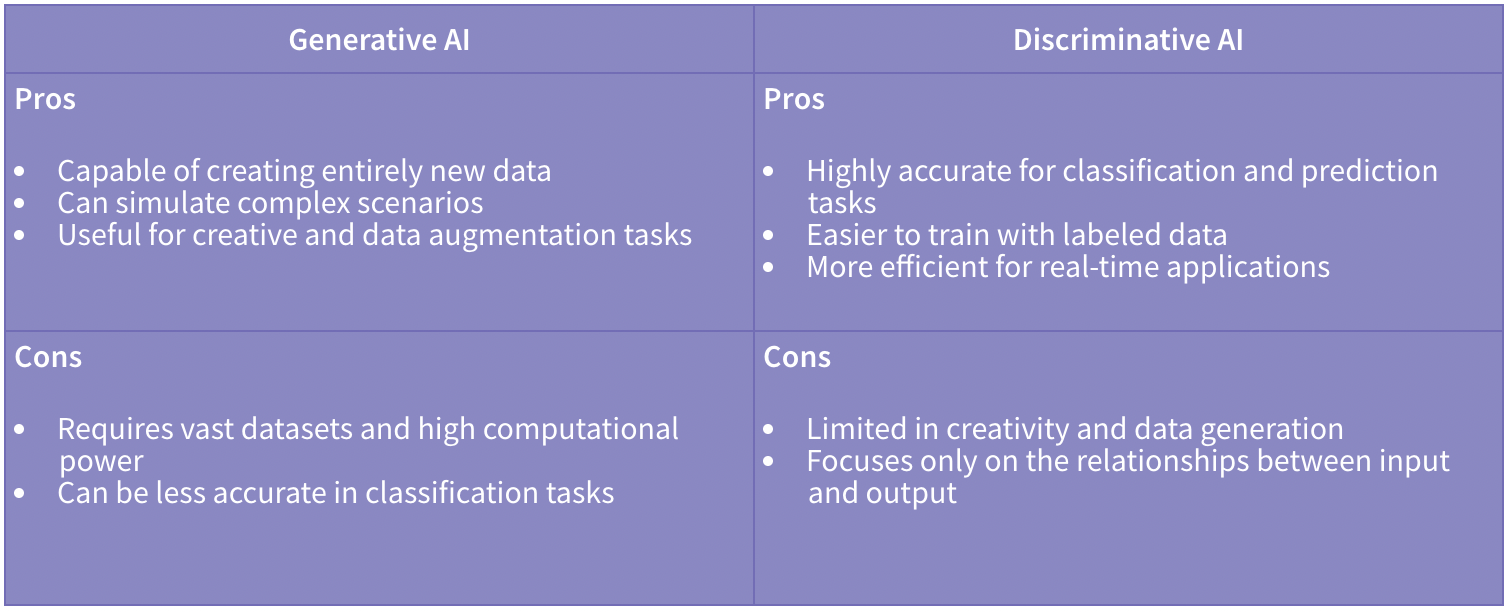
Pros and Cons of Generative AI and Discriminative AI

Screen Shot 2024-10-10 at 1.27.37 PM-1


Other Comparisons: Generative AI vs. NLP and OpenAI

Generative AI vs. NLP (Natural Language Processing)

Natural Language Processing (NLP) is a subfield of AI focusing on understanding and processing human language. While NLP has been integral to building chatbots, language translation tools, and sentiment analysis systems, generative AI represents a significant evolution beyond traditional NLP.

NLP: Primarily deals with analyzing, understanding, and responding to text-based input. It's more rule-based and focuses on tasks like translating text or summarizing information. 
Generative AI: Uses NLP as a foundational component but extends its capabilities. It doesn't just understand language but can generate entirely new and contextually appropriate content, such as drafting a research paper, responding creatively in a conversation, or even simulating customer interactions based on historical data.

Generative AI vs. OpenAI

OpenAI is a leading AI research organization that has developed some of the most prominent generative AI models, including GPT (Generative Pre-trained Transformer). The distinction here is between the organization (OpenAI) and the technology (generative AI) itself.

Generative AI: Refers to the broader technology of creating models capable of producing new content based on data. 
OpenAI: A specific company that develops and enhances generative AI models. The work done by OpenAI, such as creating GPT, DALLE, and Codex, has set industry benchmarks, but it represents a slice of the larger generative AI ecosystem. Other top competitors to OpenAI include Anthropic, Hugging Face, Google's Deep Mind, and Microsoft AI.

Generative AI at SightX

At SightX, we leverage the power of generative AI to bring insights and automation to the forefront of consumer research. Our proprietary tool, Ada, harnesses this technology to provide tailored solutions to the consumer research industry, to accelerate their time to insights.

Ada: Revolutionizing Consumer Research

Ada is SightX's AI-powered consultant, designed to integrate generative AI capabilities for advanced consumer research analysis. By using Ada, consumer insights leaders and marketers can: 

Design their survey content or experiment: Via a series of prompts, user can generate their survey content directly on the SightX platform in seconds, depending on the required iterations.
Conduct text analytics: Ada utilizes text-based models to conduct qualitative analysis including sentiment analysis and categorical analysis.
Create executive summaries: While SightX automates quantitative analytics, Ada utilizes generative AI text-based models to interpret survey results and generate executive summaries and recommendations.

Using clear and direct prompts can make all the difference when working with Generative AI tools. So you'll want to bookmark these resources:

Ada's use of generative AI doesn't stop at merely automating tasks; it aims to enhance the quality and accuracy of insights delivered to customers. By combining the power of large language models with SightX's quantitative analytics, Ada brings a new level of efficiency and creativity to consumer research. 

Generative AI is a transformative technology with vast potential, offering capabilities far beyond traditional AI approaches. By creating new data, content, and solutions, it's redefining industries and enhancing human creativity. At SightX, we're excited to be at the forefront of this evolution, empowering consumer insights leaders and marketers with innovative tools like Ada to harness the full potential of generative AI.

Estimated Read Time
4 min read