Hope, Anxiety, and Your Products

We’ve all heard of emotional buying. Most of the time, the phrase refers to consumers who purchase something without rational decision making- instead basing their decision on some affection towards a product. 

Surely you’ve heard the phrase: “it’s not wise to go food shopping on an empty stomach?”

At some level, any decision to consume has an element of emotion attached to it, however big or small the impact may be.

Two very core feelings we all experience when buying anything- from bubble gum to an iPhone- are hope and anxiety. What do you expect or desire for the outcome of making this purchase? Will the taste be everything you dreamed of? Are you apprehensive about how the product will perform or make you feel? Unlocking your phone using your face takes some getting used to, right?

When consumers are entertained using a new product that they haven’t tried before, it is typical that they experience varying degrees of hope and anxiety. Consequences from using a new product can range from negligible to life changing.

For example, a consumer might hope that purchasing noise-reducing shades may help her quiet the street sounds in her New York City apartment and subsequently help her sleep better. But she is anxious that the new shades won’t actually work in reducing the noise, and that they will end up being another expensive purchase that didn’t live up to its stated value.

When it comes to new product adoption, hope and anxiety are emotions that are integral to decisions about adopting a new product (Cohen, Pham, and Andrade 2008). They are different from other emotions because they are anticipatory in nature, which influences the future outcomes. They get invoked in response to potentially adopting a new product and have been shown to directly relate to consumers’ decisions about whether or not to adopt.

It can seem intuitive that a feeling of stronger anxiety might lead to lower chances of a purchase and a stronger feeling of hope will surely lead to adoption. But, in a study conducted by professors of marketing Drs. Lin, Maclnnis, and Eisingerich, made the counterintuitive argument and prediction that strong anxiety actually heightens new product adoption when hope is also strong.

They predicted that strong levels of hope coupled with strong levels of anxiety about a potential new purchase induces consumers to engage in a form of elaboration that they call “action planning”, which was defined as the use of knowledge for a purpose; the construction of an effective way to meet some future goal.

Accordingly, action planning will be greatest when both hope and anxiety are strongest, which are also linked to problem solving behaviors (Madore and Schacter, 2016). Furthermore, action planning was predicted to be weaker when hope is strong but anxiety is low.

In order to prove that, the researchers designed three separate studies: one in the field and two experiments that used different products and different consumer populations, while measuring and manipulating both hope and anxiety to understand cause and effect relationships between hope and anxiety across various controlled conditions.

The first study was a field study, in a real-world context, sponsored by the Bill & Melinda Gates Foundation of over 2,000 people. It involved the intentions of at-risk respondents’ (e.g. patients) from eight countries to adopt a real medication designed to protect individuals from contracting HIV. The results of the study indeed showed that the combination of strong hope and strong anxiety about outcomes from taking the medication led to a stronger intent to. adopt.

The second study was designed to see if these results would be replicated when using a different population with a different product and measuring actual behaviors rather than intentions. The design of this second study included 475 managers attending an executive education program, who consented to participate in a study about an extra strength skin treatment. The product claimed that it can produce balanced, clear, bright, and smooth skin. And interestingly, anxiety and hope levels were manipulated by exposing respondents to various social media comments

The findings of the study in a controlled lab replicated those of the first study conducted in the field. They supported the idea that new product adoption is greatest when hope and anxiety are both strong. They also suggested that strong levels of these emotions affect adoption intentions through mediation effects of action planning and perceived control over outcomes.

The third study was designed to replicate the results with a younger population and another product. This study researched 557 undergraduates about a new energy drink that promised mental clarity and physical energy. Again, both anxiety and hope were manipulated through online product reviews from other consumers. Once again, the same findings were replicated.

Do you know what your consumers are hopeful about? Or anxious about? Or maybe (more importantly) what they aren’t hopeful or anxious about?

As the researchers Lin, Maclnnis, and Eisingerich best put it in their conclusion..

“If market research reveals that consumers already have strong anxiety about outcomes from new product adoption, it would behoove marketers to develop communications that evoke strong hope rather than trying to downplay anxiety”.
Estimated Read Time
3 min read

Enhancing the Consumer Experience with the Power of Green Consumption

Consumer experience and green consumption are not topics typically discussed together. In fact, most research you can find on green consumption has mainly focused on the intention-behavior gap ( the failure to translate intentions into actions). 

Through efforts made by psychologists, marketers, and consumer insights professionals, we've come to recognize the drivers of green product adoption, from the role of environmental values and accessibility to price sensitivity and generational distinctions.

But questions still remain. What are the effects on consumers during and after purchase? How can you keep those consumers loyal? And how can you attract more consumers to this “type” of consumption?

Green consumption is related to the notion of sustainable development and, by extension, sustainable consumer behavior. By now, most (if not all) consumers have used, bought, or are (at the very least) aware of this growing trend. In the 1980s, the first environmentally-friendly products began to appear in America. While they experienced slow growth in the 1990s, they have since taken off over the last decade.

However, an understanding of how green products influence consumer behavior has remained quite limited. That is, until marketing science researchers Ali Tezer and Onur Bodur posed a central question:

How does using a green product influence the consumer experience?

the-creative-exchange-uH1EgiuWtY8-unsplash

Their aim, more specifically,  was to understand the level of enjoyment that accompanies green consumption when compared to conventional product experiences. 

To explore the question further, they turned to the economic theory of “warm-glow”.

Simply put, warm-glow describes the emotional reward of giving to others- one that we are all familiar with.  Research on warm-glow was initially conducted to challenge the widely held belief that pure altruism is the prime mechanism driving good deeds.

Earlier research showed us that humans typically feel warm-glow when performing prosocial behaviors, such as donating to a charity (Andreoni, 1990), or spending money on others (Dunn, 2008).

More recent research has shown that pro-environmental behavior similarly leads to warm-glow feelings (Steg, 2015). What's more, customers who participate in a green initiative, like purchasing a reusable product, end up feeling warm-glow and (interestingly enough) report a higher level of satisfaction with the service provided.

Most previous research on warm-glow engaged with people who deliberately made prosocial behaviors, like choosing to use green products or donate to a charity. However, in their 2019 study, Tezer and Bodur predicted that using a green product will elicit warm-glow feelings even when consumers do not deliberately choose to use or purchase the product.

They argued that green products possess inherent prosocial attributes. Therefore, merely using a green product without the deliberate intention to do so will still evoke warm-glow feelings with the implication of doing a good deed.

To test their hypothesis, the researchers planned an experiment using green versus non-green products. They predicted that when a green product (e.g. headphones) has an accompanying consumption experience (e.g. listening to music), the warm-glow feelings that arise when using the green product will enhance the accompanying user experience when compared to using a traditional product. 

This is referred to as the green consumption effect.

greenshop

To better understand the cause and effect, the researchers designed five experiments in actual settings to test multiple variables, including: 

  • Consumer experiences when using green compared to conventional products
  • The robustness of the green consumption effect
  • The process and drivers of warm-glow feelings
  • The impact of moderation
  • The effects of lowering the perception of the product being green. 

Across these five experiments, researchers demonstrated that using green products enhanced the enjoyment of the accompanying consumption experience when compared to using conventional products. 

In fact, consumers even perceived an increase in their social worth when using green products on top of the warm-glow feeling, which enhanced the enjoyment of the consumption experience.

The findings of this research have substantial ramifications for organizations across the board. There are now proven positive effects on consumers from using sustainable, environmentally-friendly products.

By utilizing an end-to-end market research platform like SightX, brands can test new messaging and research new product ideas or updates seamlessly with real-time consumer insights. All while building strong customer relationships, fostering brand loyalty, and increasing their overall brand health.


mark-adriane-muS2RraYRuQ-unsplash


Estimated Read Time
3 min read

Breaking the Algorithm: The Evolution of Our Digital Diet

"If any of us believes we are not addicted to our devices and digital media experiences, we are kidding ourselves" - Edwin Wong, Vox Media’s SVP of Insights & Innovation.

Recently, we partnered with Vox Media to engage 4,000 people across the United States to better understand our digital habits. Our research aimed to dissect both the positive and negative effects that digital algorithms have on consumers, especially in the wake of the COVID-19 pandemic.

Only through a deeper understanding of our digital “diets” can content creators, platforms, marketers, and users create a meaningful shift towards “healthier” algorithms- ones that foster a sense of unity, active engagement, and build a better society both online and off.

It’s always a pleasure to work with our trusted partners, clients, and friends to share important insights on human behavior to market research professionals and interested individuals alike. 

We anticipate a continued evolution in consumer behavior in the months and years to come. Whether it’s shopping habits or social media usage, researchers will need to keep a close eye on these trends.

Read the full story here. 


Estimated Read Time
1 min read

Can You SHIFT Consumer Behavior?

Nike, Hasbro, Unilever, and Patagonia are all very different types of companies with varying missions and products. However, one thing they have in common as of late, is their recognized need for a more sustainable way of doing business. 

Each in their own way has been adopting more sustainable practices across both product and marketing. To be clear, there are many other companies taking on similar tasks.

Generally speaking, sustainability looks to protect our natural environment, human and ecological health, while at the same time driving innovation without compromising our way of life. Seems easy enough right?

Far easier said than done that’s for sure. And not only for straight forward reasons of it being really tough to replace materials in products without sacrificing quality.

From a strategic perspective, is becoming more sustainable the right business move? Perhaps the leadership at Patagonia and Nike view that decision differently for their own reasons.

Do you really understand your consumers well enough to predict behavioral change based on this type of strategic initiative?

Given that a lot of consumers, and most Millennials, increasingly say they want brands that embrace purpose and sustainability it may be worth looking into.

Ray Anderson, Founder and CEO of Interface Carpet, a leading practitioner in sustainability mentions that “businesses able to adapt to the demands of our changing world, including the urgent demand for sustainability, will be more likely to thrive in the long term and enjoy strategic benefits.”

Apparently it’s more profitable to be sustainable!

If you ever thought about adopting more sustainable business practices or products to take part in this growing consumer trend or just because you want to be more sustainable, read on to learn more about how to encourage this kind of sustainable consumption.

A framework developed by marketing and behavioral science researchers Katherine White, Rishad Habib, and David Hardisty, is represented by the acronym SHIFT, and it proposes that consumers are more inclined to engage in pro-environmental behaviors when the message or context leverages the following psychological factors: Social influence, Habit formation, Individual self, Feelings and cognition, and Tangibility.

1) Social Influence

Consumers are influenced by the presence, behaviors, and expectations of others, which can occur through a variety of mechanisms. And social influence can be optimized by simply making sustainable behaviors more evident to others.

Social Norms

Social norms predict behaviors such as avoiding littering, composting and recycling, conserving energy opting for solar panels, and more.

Social Identities

Consumers are more likely to engage in sustainable actions if ingroup members are doing so. Viewing the self as a member of a pro environmental ingroup is a key determinant of pro-environmental choices and actions.

Social Desirability

Consumers tend to select sustainable options to make a positive impression on others, and they endorse high-involvement, sustainable options to convey social status to others.

2) Habit Formation

We are all creatures of habit. Habits are formed with repeated behavior,
often times in responses to contextual cues. More often than not you can find multiple trash cans in offices and businesses. We all know what to do when we see the three arrows recycle icon right?

Discontinuity to Change Bad Habits

Fines can encourage behavioral change in domains that can be monitored, such as the disposal of waste, whereas taxes and tariffs can be effective in domains that involve strong habits. Product pricing can be used in much the same way!

Implementation Intentions

One means of transitioning people from an old habit to a new one is to have them consider thoughts about what steps they need to take to engage in the action. Such intentions can positively influence recycling and sustainable food-purchasing habits. New behavior is encouraged through repetition.

Making it Easy

Many sustainable actions are viewed as effortful, time-consuming, or
difficult to carry out. Is your new product or sustainable service just as easy
or easier to consumer than before?

Prompts

Another means of encouraging sustainable habit formation is the use of
prompts: messages that are given before the behavior occurs to remind the
consumer what the desired sustainable behavior is.

Incentives

Rewards, discounts, gifts, and other extrinsic incentives can increase desired behaviors and positive habit formation. Monetary incentives such as rebates, tiered pricing, and cash can encourage people to adopt and maintain sustainable behaviors.

Feedback

Provide consumers with specific information about their own performance
on a task or behavior. Plus, people just like being reminded how awesome
they are for protecting our environment.

3) The Individual Self

Factors linked to the individual self can have a powerful influence on
consumption behaviors. This include positivity of the self-concept,
self-interest, self-consistency, self-efficacy, and individual differences.

Self-Concept

As a result of the desire to view the self positively, people often exhibit self-defensive reactions to learning that their own behaviors have negative environmental impacts and derogate others displaying more sustainable actions.

Self-Consistency

Self-consistency research shows that a consumer reaffirming a component
of the self-concept (e.g., being environmentally concerned) or engaging in a
sustainable behavior at one-time point often leads to consistent sustainable
behaviors in the future.

Self-Interest

Highlighting the self-benefits associated with a given sustainable product, service, or behavior can be an effective method to encourage sustainably.

Self-Efficacy

Self-efficacy involves beliefs that the individual can engage in the required action and that carrying out the behavior will have the intended impact. Consumers’ feelings of self-efficacy predict their sustainable attitudes as well as their tendencies to continue to enact sustainable behaviors over time.

Individual Differences

Individual differences in personal norms around sustainability predict
sustainable behaviors, including recycling, selecting sustainable food, and
being willing to pay more for sustainable options.

4)  Feelings and Cognition

The concepts of feelings and cognition are together because, generally
speaking, consumers take one of two different routes to action: one that is
driven by affect or one that is more driven by cognition.

Negative Emotions

Subtle activation of negative emotions can be effective. Ever acted differently out of guilt? Thought so.

Positive Emotions

Consumers are more inclined to engage in pro-environmental actions when
they derive some hedonic pleasure or positive affect from the behavior.

Information, Learning, and Knowledge

One basic means of persuading consumers to engage in eco-friendly actions is to present information that conveys information regarding desired (and undesired) behaviors and their consequences. Intelligence, education, and knowledge are linked to greater responsiveness to environmental appeals and engagement in eco-friendly behaviors. 

Eco-Labeling

Eco-labeling is one means of conveying information about the sustainable attributes of a product. Labels that are attention-grabbing, easily understandable, and consistent across categories can enable consumers to make better informed eco-friendly decisions.

Framing

Marketers can strategically choose message framing to encourage sustainable choices Because consumers care more about future losses than about future gains. For example, labels on energy-efficient appliances should compare energy costs rather than savings.

5) Tangibility

Most sustainable consumer behaviors involve putting aside more immediate
and proximal individual interests to prioritize behaviors with ill-defined
consequences that are focused on others and are only realized in the future

Matching Temporal Focus

Consumers are often present-focused. When consumers judge a future environmental payoff to be distant, it becomes less desirable in the present. One solution to this mismatch is to encourage the consumer to focus on future benefits of the sustainable action. Do it for your grandchildren!

Communicate Local and Proximal Impacts

Communications that relate the more immediate consequences of pro-environmental behaviors for a given city, region, or neighborhood can make
environmental actions and outcomes seem more tangible and relevant.

Concrete Communications

Making sustainability issues more relevant and concrete for the self. This can be done by communicating the immediate impacts of environmental problems such as climate change and outlining clear steps to make a difference.

Encourage the Desire for Intangibles

Promote dematerialization in which consumers decrease emphasis on the possession of tangible goods. This could include consumption of experiences, digital products or services.

Estimated Read Time
5 min read

What Can Children Teach Us About the Future of Marketing?

One big lesson and what it means for our future. 

A gathering among friends is taking place at someone’s home. While the adults catch up over food and drinks their children, ages 2-4, watch television together in the living room.

Suddenly, one of the children begins to cry. When the mother arrives, the child gestures towards the TV, indicating that something has gone wrong. 

As the mother rushes to fix the issue, she realizes that nothing appears to be wrong, at least from her perspective. It was just a regularly scheduled commercial break. 

As it turns out, this is the child’s first exposure to cable TV and, by extension, advertisements. Until now, the movies and shows she had consumed during her entire, albeit short, lifetime weren’t broken up by blocks of ad space pushing products to the masses.

The Rise of Streaming 

Aside from the story above being true, it also serves as an eye-opening realization of how the newest generation is growing up and viewing the world around them. Such a small moment may seem insignificant- but upon closer inspection, this scenario has sweeping ramifications for professionals in the marketing, advertising, research, and consumer insights fields. 

The behaviors and expectations of these children, in many ways, point towards the future of consumer behavior. Similarly, their actions send a strong message to professionals that there is not just an opportunity, but a need to adapt.  

And it’s not just the kids; consumers of all ages have changed irrevocably. How, when, and where we engage with brands has evolved. Because of this, our expectations as consumers have developed faster than a brand’s ability to keep up. And in case you need any evidence, think about your own relationship with the media you consume, the products you buy, and the brands you engage with. 

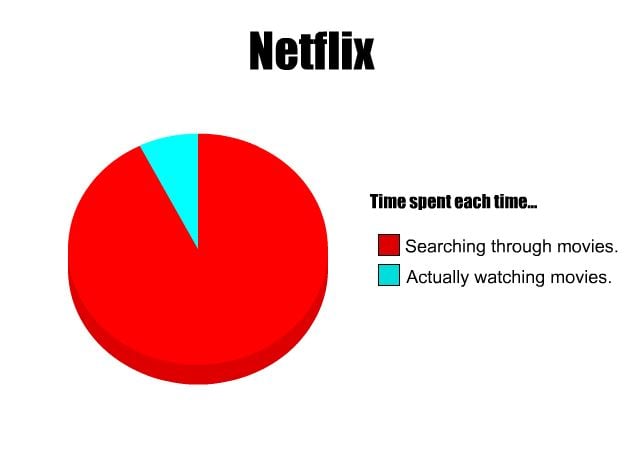
Waiting an entire week for the next episode of your favorite show? Yeah right. Think again.

time spent on netflixSo, what’s the lesson here?

When presented at the wrong time, even the best commercials and advertisements will just be a jarring annoyance.

The Interest Economy 

Not so long ago in a “pre-streaming” world, many of us were willing to accept those momentary interruptions, also known as commercial breaks. But you know what they say- “the times they are a-changin’”.  

We now live in an “interest economy,” where we choose only to engage with what we want when we want. Consumers today are glued to the content and activities that attract them. So, unless you curate your messaging to their specific interests or needs, your marketing campaigns will be considerably less effective, if not doomed to fail. 

To overcome these obstacles, brands must understand how each subset of consumers view the world and adapt their outreach accordingly.

How to Engage the Right Way

Now for the good news. It is possible to target multiple groups of consumers with the same product or service if you know how each group thinks, feels, and behaves. Simply put, you need to understand why they do what they do if you want to engage them in any meaningful way. These tips can help you do just that:

1. Get to Know Your Audience

Seriously. Get to know who your consumers are. What do they love? What do they hate? What can they do without? Familiarize yourself with the habits, preferences, values, and characteristics of your audience. 

This means you’ll need to understand them on a deeper level, not just their satisfaction with your product or their likelihood to recommend it to their friends. Only when you know who they are, are you able to curate content, services, products, and experiences that excite them. 

How? You’ll never know until you ask. So conduct behavior and attitude studies, concept tests, brand perception and awareness studies, pre-and post-purchase feedback, and satisfaction assessments. Even utilizing Natural Language Processing (NLP) to extract sentiment from product reviews is a good step in the right direction.

If you’re a little hung up on figuring out how to better know and segment your audience, see our blog on consumer segmentation to learn how you can get it right.

2. Timing is Everything

For those of us who remember landlines, think back to all of the sales calls that would, without-a-doubt, interrupt dinner. If that approach didn’t work for advertisers then, a similar approach won’t work now.  If you want to reach your audience effectively, you’ll need to find the optimal time(s) to engage them. 

For some consumers, it might be while they are experiencing your product. For others it could be just before the point of sale, or as they are actively searching for products, services, or brands like yours. Reviewing channel metrics and directly asking existing customers about their preferences can help you zero in. 

The fact is, there is a science to timing for optimal and meaningful engagement. Do your research and act accordingly.

3. Meet Consumers on Their Terms

Understanding the entire consumer journey for each of your segments requires a relentless pursuit of knowledge and analysis. As a marketer, it’s not about simply reaching your audience, but instead about meeting them where they already are. 

Think about the shopping habits of your audience, for example. If you haven’t already, figure out where they prefer to shop and why. Is it online? Great, what devices do they gravitate towards? Do they like to shop from home or while on the go? Or, perhaps they go for the in-store experience. Whatever their choice may be, it is up to you to find out. 

Let’s take, for example, restaurants. Many are dealing with applications like Yelp, Seamless, or Postmates, meaning their customer engagement is often split between multiple touchpoints, from in-store service to online brand interactions.  

Do the service and experiences vary across these mediums? What types of customers interact with you at different touchpoints and why? Only research can help you find the answers.

The Takeaways

In a world where consumers don’t just desire instant gratification but expect it, the window for brands to impress and retain their audience is shrinking. Consumers demand impactful and curated content-anything less just won’t do.  

Make them feel like it’s about them, and there is a higher probability you will win their business.

To succeed, you’ve got to be curious and equipped with the right tools. SightX can take the burden of data analysis from your team, and turn it into actionable insights. Freeing up more of your time, so you can focus on the things that matter to your audience.  


Estimated Read Time
5 min read

Let’s Get the Band Back Together

In the book “Team of Rivals”, Doris Kearns Goodwin describes the political brilliance of Abraham Lincoln. Determined to hold his party together, Lincoln had appointed three men to his Cabinet who had previously run against him in the 1860 Presidential election.

These men despised him and had at times schemed against some of his most important efforts. But over the course of his term, most came to respect and collaborate with Lincoln, helping him to ultimately keep the Union together during the Civil War. His thoughtful strategy of keeping his enemies close had effectively removed the toxic mentality of “us versus them” within his administration, instead allowing for the prioritization of the nation’s most pressing needs, leading America on a path to a brighter future.

Fast forward to over a century and a half later and our country is confronted with a similar set of challenges. Two Presidential nominees represent another major civic divide, one that only seems to be widening. And a third candidate is entering the race, which has the potential to impact the results.

Still, some of the most critical questions that need to be answered are not being asked: What is going on in the American society? What are the drivers and motivations of voters? How did this divide develop and from where is it coming?

At SightX we set out to shed some light on this dynamic by engaging with a sample of voters and using our data analysis platform to immediately process and analyze the results. We care deeply about the direction America is headed and we want to take part in a necessary discussion. Through data we hope to engage in a meaningful way.

Unlike political polls which seem singularly focused on predicting who will win the election, we at SightX want to understand the deep divide between the American people. No matter who wins this Presidential race there will be tens of millions of Americans whose hopes will be dashed and whose fears, frustrations and pains will be amplified. These anticipated sentiments shouldn’t be overlooked.

Our first step at SightX was aimed at diagnosing overall voter sentiment. We used our platform to engage through various social media outlets, asking voters to answer a brief set of questions. In short order we had hundreds of responses. There were 37.3% Hillary supporters, 29.4% Trump supporters, 16.9% Undecided, and 12.2% Gary Johnson supporters. There were also 4.2% not planning to vote. What follows are some of our findings:

Best of the worst

In a striking example of the tone of this election, we found that most people aren’t even satisfied with the nominee for whom they plan to vote. When asked about the overall satisfaction with their choice (on a scale of 1 to 100), Trump supporters averaged 55.3 with a median (midpoint) of 50, while Hillary supporters averaged 58.2 with a median of 63. The bottom line is these numbers are low.

For all of the strong language used against the opposing nominee, the American people are still dissatisfied with who they feel is comparatively better at representing their interests.

The numbers explained

Qualitative data becomes all the more powerful when the numbers are explained. We asked about key reasons people supported a particular nominee.

Among the regular topics such as the economy, immigration, foreign policy, women’s rights, etc., we included “Other”, and asked individuals to elaborate. The overwhelming answer was that they had chosen this nominee simply because it was not the other. They have been left with the choice of the lesser of two evils.

It seems that no matter the outcome, dissatisfaction will be at an all-time high. Getting to the underlying and primary reasons for this dissatisfaction will be the key to genuine communication and problem solving. We need to find common ground beyond bipartisan politics and look to address those underlying needs.

Internal divide is huge

Standard deviation for the overall satisfaction with a chosen nominee was 25.4 among Hillary supporters and 27.3 for Trump supporters.

To put this into perspective for non-number lovers, these standard deviations are Huuuge! It means that there is a massive variance in responses ranging from being entirely dissatisfied all the way to entirely satisfied with a nominee.

Politics of division have permeated both parties and it’s time for all of us to take a long hard look into the mirror.

Everyone is misguided

It’s not all that bad. We did uncover some good news in the data. Supporters of both Hillary Clinton and Donald Trump have actually found some common ground: Everyone else is misguided.

We presented all voters with 20 personality characteristics, ten positive and ten negative, and asked them to select “those characteristics that describe the other nominee’s voters”. The highest rated item across both groups was characterizing the others as “misguided”.

The way that some politicians and constituents rationalize our collective madness reminds us of a quote from Herman Melville in 1851 that is eerily relevant today:

“But when a man suspects any wrong it sometimes happens that if he be already involved in the matter he insensibly strives to cover up his suspicions even from himself. And much this way it was with me. I said nothing and tried to think nothing.”

Insulting each other differently

What happened after both sides rated each other as “misguided” was equally as interesting. Hillary supporters followed by characterizing Trump supporters as mostly “angry” and “hateful”. Trump supporters characterized Hillary supporters as “naïve” and “close-minded”.

The interesting thing about this finding is that Hillary supporters tend to characterize Trump supporters based on affect-based characteristics (e.g. angry, hateful), an evaluation based on feelings and emotions that are evoked.

Trump supporters, on the other hand, describe Hillary supporters based on cognitive-based characteristics (e.g. close-minded, naïve), less of a raw emotional response and more of an evaluation based on assessing that the others are generally perpetuating problems they are experiencing, but not searching for a singular reason or root cause. We controlled for other variables such as gender, and the results did not change.

While the highest rated characteristic for both candidates was “misguided”, we noticed something else that was concerning. Apparently, in addition to myriad negative characteristics, each side has resolved that “the other side” has no redeeming qualities. Voters from the opposite group are not reasonable, kind, thoughtful, or caring (less than 5% of responses).

Collapse of complexity

In the last decade, there has been an increasing number of studies showing the negative consequences associated with a monolithic world view. The ‘collapse of complexity’, as it’s referred to, is associated with destructive processes. Dr. Peter Coleman and his team at Columbia University have illustrated this phenomenon in many fields.

In physical health, as an example, complex rhythms of the heart reduce to simple ones before cardiac arrest and psychological pathologies are associated with rigidity (e.g. bi-polar). On the other hand, complex political thinking is associated with more constructive processes in managing diplomatic crises and in business, a complex thought process can lead to more innovations and breakthroughs!

In this election there is an increasing lack of complexity in perceiving the other groups. This is when people shut down, don't process new information, and don't engage in thoughtful ways. It is ultimately the problem that the American society faces.

America has become more and more subject to group centric thinking and more myopic in respective viewpoints. We have seemingly lost the ability to entertain different perspectives and place them into the larger context of domestic and international policies.

Abraham Lincoln argued that “In order to win a man to your cause, you must first reach his heart, the great high road to his reason”. Our findings suggest that the real crisis America faces has to do with a lack of constructive engagement taking place among the American people. Leaders will come and go, but our society is here to stay.

Americans have a good amount of work to do to rediscover each other. We need to listen. We need to ask ourselves what is beneath each other’s ideas, what is it that has given rise to who we are as individuals and what each of us believes. In order to better understand one another, a level of empathy is required. Only then will our candidates rise to the occasion to deliver better policies, and a better America.

It’s time to get the band back together.

*This study was conducted using the software platform of SightX. All insights were drawn from data that was captured and analyzed in real-time. SightX is a tool for extracting insights and intelligence from human behaviors and sentiments. By automating the analysis of data from human engagement, organizations are able to operate faster and more efficiently, saving time and money in the process.

 For more information or to find out how SightX can help your organization, please contact us at sales@sightx.io or visit sightx.io.

Estimated Read Time
6 min read

What the Fundamental Attribution Error Means for Marketers

In the last half-century, social psychologists have demonstrated time and time again that contextual factors are stronger predictors of human behavior than personality variables. 

Unfortunately, consumer research doesn't always take them into consideration.

Every day, marketers are working to better understand the psychology of their audience, from sentiments and perceptions to behaviors. As such, there has been an extensive amount of effort invested in segmenting, clustering, and persona-building. Yet, far less effort has been invested in understanding the contextual variables that influence consumer psychology.

That's because marketers and advertisers fall into the trap of the Fundamental Attribution Error (FAE). The phenomenon was coined to describe the well-documented tendency to explain another person's behavior based on internal factors, like personality or disposition, and to underestimate the influence that external factors, like situational influences, have on their behavior.

We tend to underestimate the impact of the environment when interpreting and explaining the behavior of others. And we overestimate the impact of someone’s personality. Generally, people tend to believe the fault lies with someone else and not their surroundings.  

This phenomenon was first scientifically documented in 1967 by social psychologists Edward Jones and Victor Harris. 

When we witness an action by someone, we are often unable to appreciate the influence of situational factors on human behavior. For example, when someone cuts you off in traffic, your immediate reaction often is, “this person is a complete jerk!” But in reality, maybe they never cut anyone off and only did it this time to get to the hospital, where their wife is about to give birth.

While psychologists have found that we make the fundamental attribution error about other people,  it’s often quite the opposite when examining our own behavior. When we do things, we always have a good reason, right? Situational factors are equally (if not more) important than personality when determining how people behave.

What Does This Mean for Marketers? 

This isn’t just a simple social science finding- it has everything to do with your marketing and advertising. And it doesn’t stop there, the FAE can affect nearly every aspect of your business.  So, it’s crucial to develop your consumer engagement in such a way as to understand other biases that consumers may use when interacting with your organization. 

For the most part, this challenges the current advertising status quo- where a heavy focus is placed on identifying consumer profiles and target audiences. But if marketers want to effectively understand consumer behavior, they must also understand contextual factors in parallel. They need to identify the relevant context and examine their relationship with consumer profiles and behaviors. 

Contextual factors include, but are not limited to: 

Environment: Economic, political, health, or even organizational environments can all have a large influence on consumer behavior. One of the fathers of social psychology, Kurt Lewin, demonstrated how all human behavior is a function of both environment and personality. The more those two factors and their interaction are taken into account, the higher the accuracy level of understanding.

Culture: A set of shared beliefs, attitudes, values, customs, and rules can have a great influence on human behavior. As brands become more global, they need to ensure that their products and messaging are relatable to both local and global consumers.

Social Factors: These can include circles of family, friends, colleagues, and in some cases even including celebrities, brand ambassadors, and product consultants. Marketers need to examine the interaction between social factors and the personality types they influence.

Role: Being aware of variables such as position, profession, and even status are important to understanding consumers' state of mind. 

Space and Time: Research has shown again and again that the physical or virtual space where consumers interact with products greatly affects their behavior. Noise, ease of navigation, and aesthetics are just a few examples. Additionally, consumer relationships with time, be it the time of the day, feeling of being rushed, or how long it takes to complete a transaction can be a major determinant in consumer behavior.

The above list represents just a few of the many elements that are relevant to consumer behaviors. If marketers and advertisers want to unlock consumer behavior insights, they must avoid the FAE, and study consumer segmentation and profiling in conjunction with contextual factors.

If you're ready to understand your customers more holistically, we're here to help. Reach out today for a demo!

Estimated Read Time
3 min read

Is Customer Loyalty Dead or Are You Doing It Wrong?

“Is customer loyalty dead?”- we get this question a lot. And due to changing dynamics in the retail industry, it’s being asked more frequently than ever before. 

Today, brands are under immense pressure to maintain sustainable customer loyalty given the plethora of choices that consumers are faced with. This makes it tough, if not nearly impossible, to compete on just product, service, or price alone. 

In recent years, we have all witnessed first-hand the exponential growth in consumer choices. But what is it that makes consumers stay loyal to your brand? Has “analysis paralysis” caused a decline in customer loyalty? And are you making the right moves to stay relevant to your base? 

The first step to answering these questions and generating loyalty is diving into consumer psychology to better grasp what is expected of your company.

Exploring the Significance of Loyalty 

At its core, customer loyalty refers to a customer’s willingness to consistently engage with a company and repeatedly use its products or services. One of the reasons that loyalty is so important to an organization is that good ol’ word-of-mouth can take you farther than marketing or advertising ever will. Why? It’s pretty simple: built-in trust. People are far more likely to heed the recommendations, or warnings, of those in their inner circle. 

As you build loyalty, customers will spend more time and money on your brand. Over time these loyal customers become “brand evangelists,” spreading the word about your brand to their friends, family, and co-workers. While each individual recommendation may seem small, word of mouth grows at an exponential rate. Even if one person only tells two other people about your product, it’s pretty easy to see how it can snowball over time to become a powerful force. 

It also might be worth noting that a 5% increase in customer retention correlates with at least a 25% increase in profit (Bain & Company). Or that Loyal customers spend 67% more with a business than new ones (Thanx). So, we’ll let you do the math.

Is Customer Loyalty Dead?

We set out to answer this question by engaging with 2,700 consumers across the United States, ensuring the sample represented all demographic segments.

In our experience, we have found that multiple-choice questions can lead respondents. So to avoid this, we used our proprietary artificial intelligence software to analyze text responses. This allowed us to ask open-ended questions aimed at eliciting organic data, like: “Is there a product or brand that has ‘won you for life’ as a customer?” This method enabled us to capture unstructured data and avoid making assumptions about what drives consumers to be loyal or disloyal.

consumer research, consumer insights, market research, loyalty

Surprisingly, it was revealed that in fact, 88% of respondents consider themselves loyal customers to a company/brand that has “won them for life.” These included everything from electronics brands to food brands, and all types of brands in between, big or small. This just goes to show that brand loyalty is alive and well after all.  

The next, and arguably the most important question was why? What did these companies do so exceptionally well that consumers felt the need to proclaim their allegiance? We were told that it was product quality and customer service that were the leading indicators for customer loyalty. Over 40% of consumers said that product quality and customer service are what drives their loyalty to a company.

We also asked respondents about hypothetical deterrents that would stop them from purchasing again. It should be no surprise that more than 40% of consumers told us that it would be poor product quality, consumer service, and a bad shopping experience that would drive them away from a brand. These trends held true across all age groups and ethnicities.

While some retailers still want to believe that price is a determining factor, our research said otherwise. We found that price can be a factor for consumers when choosing a product, but usually it has very little to do with whether or not a customer will decide to be loyal to a brand for the long haul. But this isn’t necessarily bad news. Price is often something that organizations have little control over, but customer experience and perception are both factors that you can work to improve and manage over time. 

So What Now?

While online clicks and shares are indicative of consumer psychology, companies can’t solely rely on them to understand what drives consumers to stay loyal to their brand. Our findings point to the fact that price discounts and sales are not a sustainable strategy for growth. However, understanding what drives your consumers to maintain love for your brand is. 

If you are an established brand, hopefully you’re already leveraging processing fluency so that consumers mentally associate your brand and products with good quality and service. This in turn means they are more likely to buy from you going forward. As loyalty builds for a consumer over time, it gives you a large advantage over your competitors. But this is only established with an on-going and holistic understanding of your customers' psychology. 

If you’re a young company without a decades-long track record of product releases, have no fear! This is where effective consumer research will make all the difference. Utilizing tools like SightX allows you to gather raw data on your target audience and turn it into actionable insights, letting you better understand what you’re getting right, and what you might be missing. 

Find out how SightX can automate your curiosity.


Estimated Read Time
4 min read

Consumer Psychology in the Time of COVID-19

Key Highlights as of March 20th

  • Overwhelming majority of respondents, 76%, think the U.S. is headed towards a recession
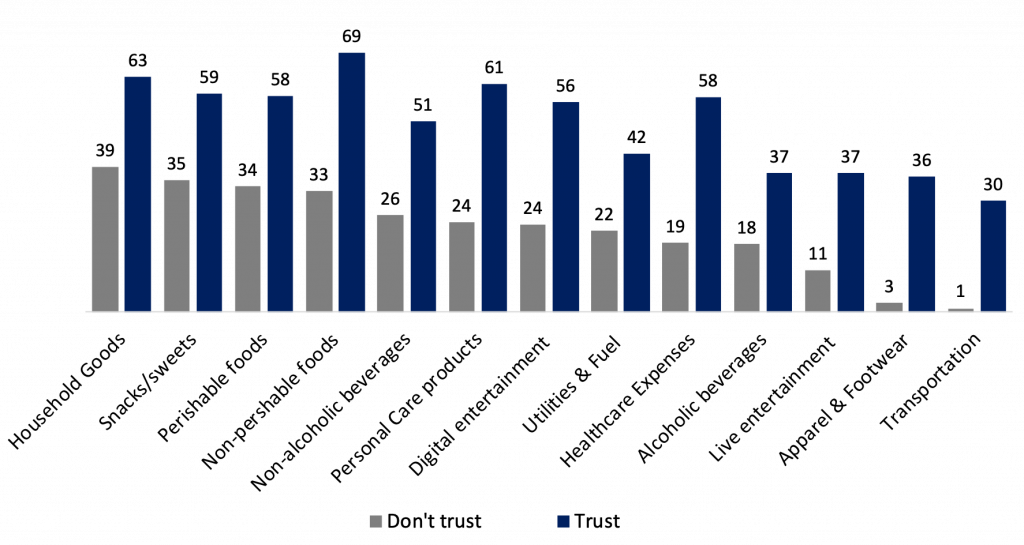
  • Those who “trust that the government will take care of” them are up to 38% more likely to increase spending across all consumer categories
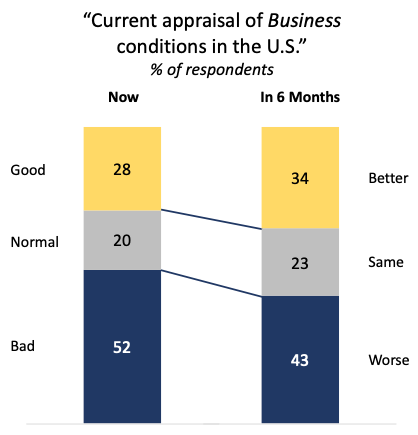
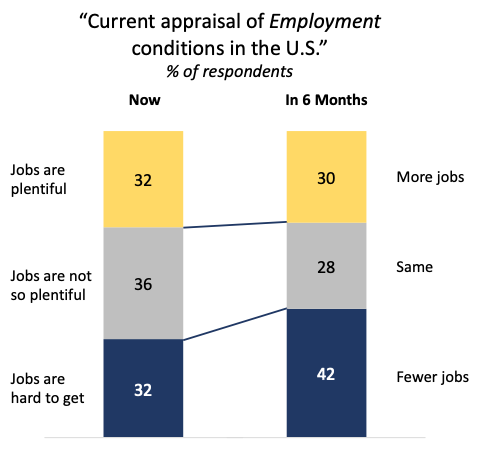
  • 34% (+6%) of consumers expect business conditions to improve in 6 months, but 42% (+10%) expect employment conditions to worsen in 6 months with fewer jobs

From worldwide lockdowns to government interventions and mandated work from home policies, the Coronavirus, or COVID-19, has impacted nearly every person on the globe. 

At home in the U.S., debates rage from state to state and with the Federal government on how to best address the needs of public health, the economy, and the consumer.

The current situation has been compared to the 2008-2009 financial crisis, and while experts can’t yet tell the full scale of the impacts of this current crisis, one thing is already certain: main street and the everyday consumer has already been significantly affected. 

Because consumer research and understanding the ever-changing sentiments and behaviors of consumers is even more important now, SightX set out to find out just how consumers were faring and how businesses can best respond during these challenging times. In our study, we received responses from 510 U.S. based consumers, representative of the U.S. general population. Insights presented here are reflective of the U.S. market from March 18th to the 20th.


Fear, Uncertainty, and Doubt

Unease is settling over consumers quicker in this current situation because it has touched all aspects of the economy at the onset, not just financial institutions. 

  • 77% of consumers are worried about COVID-19 “impacting their personal lives”
  • 76% agree that the U.S. is “headed into a recession”

And, in that context…

  • 52% said they were “satisfied with the U.S. President’s handling of the situation,” yet;
  • Only 37% trust that “the government (federal or state) would take care of them”


How will Consumers Respond? 

In uncertain times, businesses and consumers alike will adapt their behavior in a variety of ways. Unfortunately, some recent behavioral changes have been mandated with top down ripple effects already being felt across almost all industries. 

Because consumer sentiment in these times is changing, almost daily, our aim was to get at expectations of spending on different consumer categories two to four weeks out. We found that 69% of consumers were “actively planning on reducing personal spending” in general, in the immediate future.

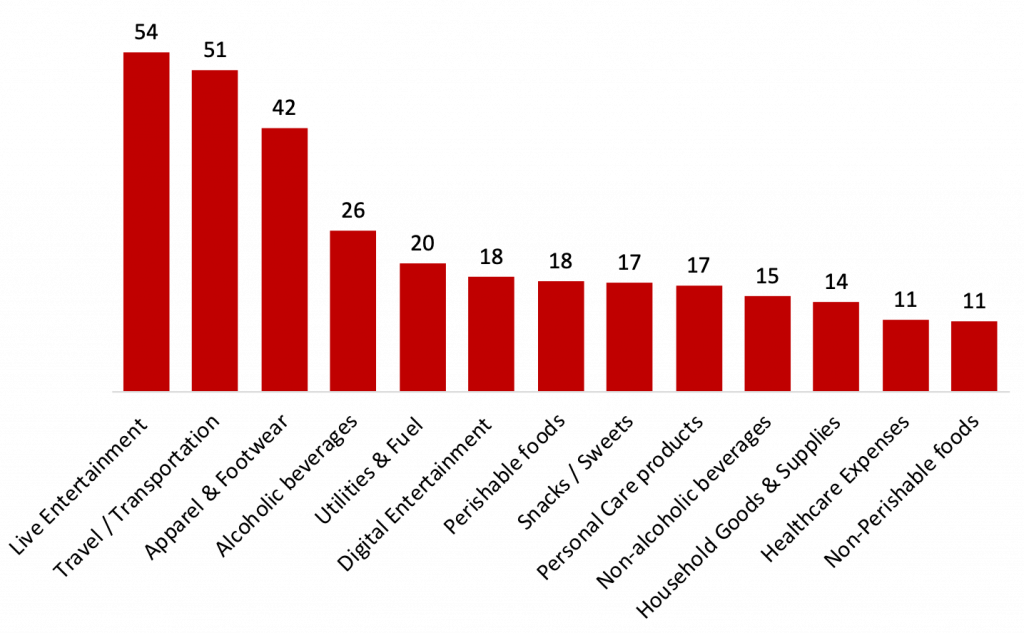
  • As you can imagine, live entertainment (54%) and travel (51%) were categories most expecting a reduction in spending
  • A close third in our study was apparel & footwear (42%), however an equal number of respondents (42%) were expecting no change in their spend in that category


Decrease Spending (%)

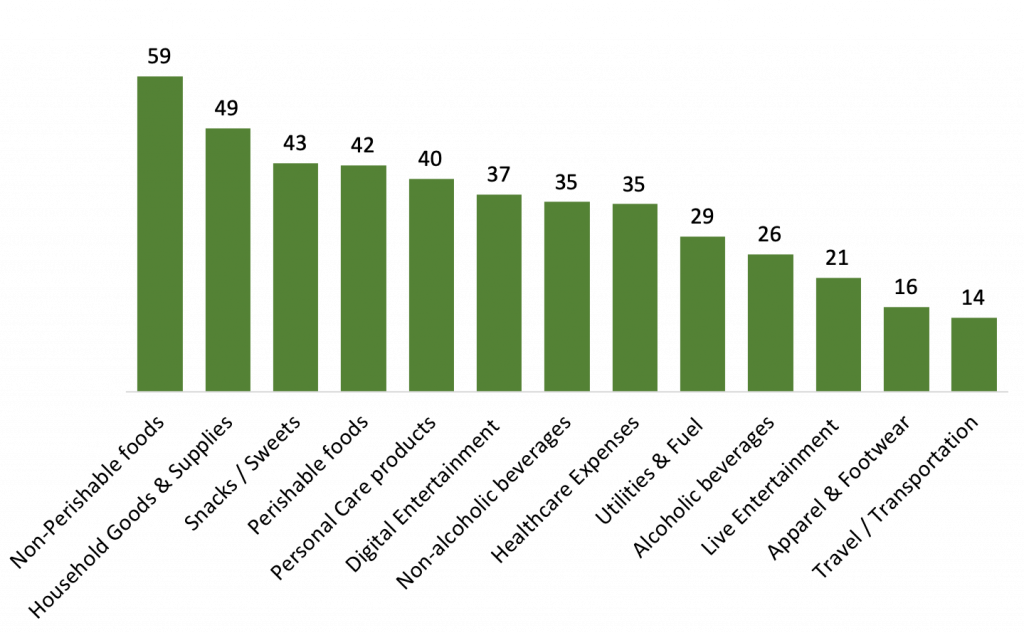
  • Areas of expected increase in spending were non-perishable foods (59%), household goods (49%), snack/sweets (43%), and perishable foods (42%)

Increase Spending (%)


We followed up by examining group differences in consumer behavior, including gender, income level and age groups.

There weren’t any major differences across income levels and gender, where overall the same trends and distributions of spending behaviors were the same. The highest percentile difference across income levels was only 5%. 

Respondents aged 18 to 54 years old expressed more of a tendency to change spending habits, either an increase or decrease across categories, versus respondents who were 55 years old and above.

Older respondents were more likely to keep spending habits the same.


Where We Are and Where We're Going

Consumer confidence, to a large degree informs economic planning and activity. So we asked consumers about their assessment of the general conditions of business and employment in the U.S., now and 6 months hence.

The good news is that consumers generally expect the business conditions in the U.S. to improve in 6 months with only 43% (-9%).

Although even in that context, 42% (+10%) said they have an expectation of “fewer jobs.”


So, What Does Drive Behavior? 

In addition to behavioral conditions, we examined several general psychological mindsets and world views that consumers have, to include self-agency, optimism, trusting that governments and states take care of their citizens, importance of luck in ones’ life, the goodness of humanity, and its rationality.

This was done with the goal of analyzing potential psychological drivers of consumer behavior.

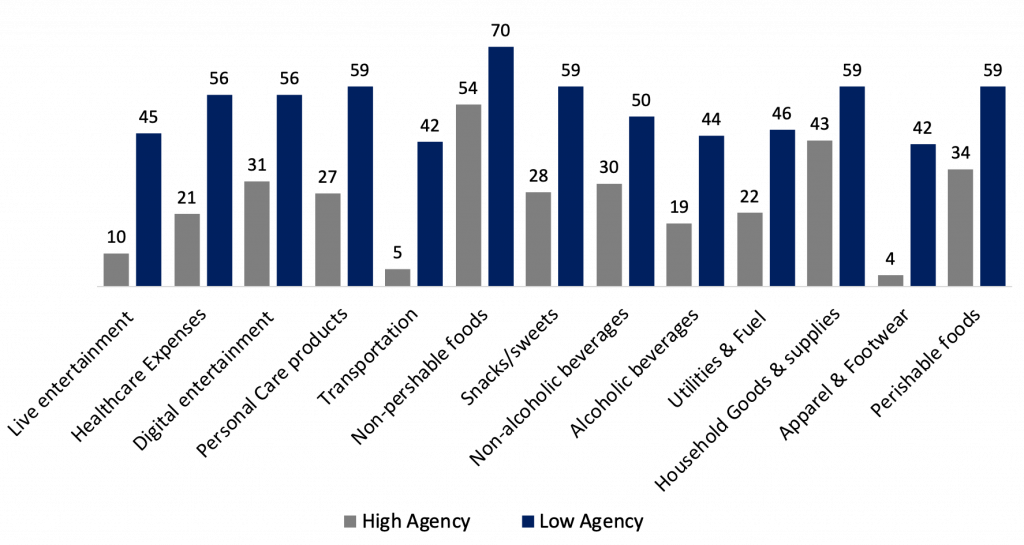
The two most powerful insights uncovered were related to two variables: a person’s sense of self-agency (does luck dictate my life or not?), and ones’ trust that the government (federal and/or state) will take care of their citizens.  

With the question of “I trust that the government (federal and/or state) will take care of me,” measured with a 5-point scale, top and bottom buckets were determined and compared on likelihood of increase in spending across each consumer category.

Those who “trust that the government will take care of” them are up to 38% more likely to increase spending across all consumer categories.

With the question of “In general, I think one’s life trajectory is about luck,” also measured with a 5-point scale, top and bottom buckets were determined and compared on likelihood of increase in spending across each consumer category.  

Those who had lower sense of agency, they think luck plays a big role in their lives, were significantly more likely to increase their spending, versus those who had higher self-agency (as opposed to random luck), who were more likely to buckle down on spending.

Those two psychological variables were the most powerful predictors of who is more likely to alter spending habits, much more so than any other demographic or control variable, including gender, income, or age group. 

This preliminary study suggests that some of the strongest indicators of consumer behavior in this particularly challenging COVID-19 environment are actually driven by consumer psychology and mindset rather than a specific consumer demographic. 

Estimated Read Time
4 min read

Millennials and their Drinks... It's Complicated

Millennials are likely one of the most studied generations to date. 

As a group, we are very diverse. For every study on Millennials that shows us to be the scorn of our culture, another shows us to be entrepreneurial, conscious capitalists. 

All of this can really make your head spin. 

As a co-founder of SightX, it just so happens that I have at my disposal some innovative ways to dig into such a topic and uncover the real truths about this generation. 

Through all of the work we've done with clients, more often than not, researching Millennials and their preferences is a top priority. One big reason is that we are set to account for 30% of all retail sales by 2020. We are also incredibly mobile, tech-savvy, and well-educated. Oh to be a Millennial, the focus of so many brands and sales initiatives!

While the team and I were sitting around one evening- as Millennials ourselves-we wondered, how in the world do we deal with this pressure? Well, on the evening in question, it was with a nice full-bodied red wine from California at a bar around the corner from our office. Later that week, I was at home pondering the same, and I thought to myself- I’d like a bourbon Manhattan. It's my go-to drink when I want to feel sophisticated and introspective.

So we figured, why not try to find out how Millennials imbibe? What influences those adventurous, impatient, results-oriented, progressive, confident Millennial’s drink preferences?

Well, as it turns out, our biggest influences come from…each other. 

We found that even though we all have our favorite drink when we do branch out, 35% of us switch based on the recommendations of people we’re with. While it may not be as easy for an alcohol brand to create an online community to foster conversations and encourage reviews from customers, these influences are something for those brands to think about.

But then, sitting at home with my bourbon, I realized that my drink preference can be different than when I’m out on the town with friends or eating at that cool new restaurant in NYC that took 30 days to get a reservation. 

So does occasion really influence our preferences? Yes, but only partially. It’s an incomplete question without the full context. Our findings showed that other factors also hold sway- which means there was more research to conduct. 

60% of us claim that the occasion does influence our drink choices. For the 40% who disagreed, when they did actually make a conscious drink change, the primary driver was- you guessed it- the company they kept. 

Of all the drinks that we asked about, beer and wine are still the perennial favorites. But, interestingly enough, vodka came in as a not too distant third. Is this more Russian subversion of our American culture? Another unanswered question for the FBI perhaps? I missed the report from the House Intelligence Committee, so maybe this was covered, not sure.

Another trend that we thought was interesting to point out is that Millennials seem to be a bunch of homebodies. 

Of the top beverage choices, nearly 40% were most recently consumed at home or a friend’s home. Is this a new challenge for brands? Yes, you can reach almost anyone in this mobile-first culture we live in, but how do you really engage? 

If anything, our findings reveal that we Millennials are more diverse than the label would lead some to believe.

These were my reflections on our study. To read the full report or explore another topic, feel free to reach out:  tim@sightx.io.

Estimated Read Time
2 min read